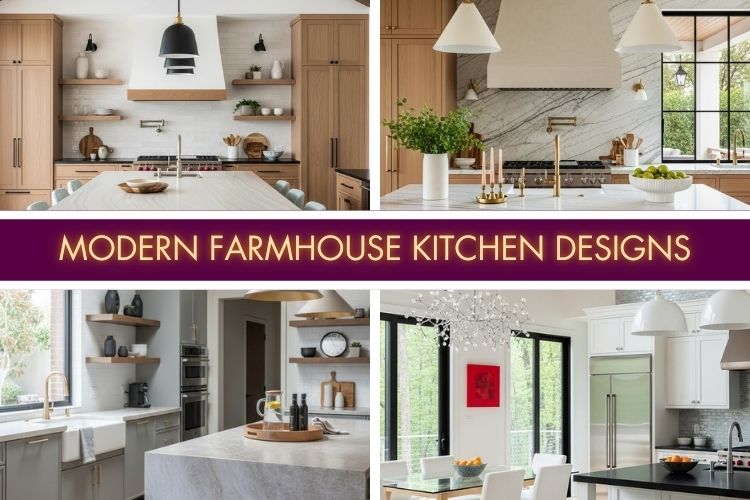
Modern farmhouse kitchen designs have fundamentally shifted the way we view the heart of the home, blending pastoral charm with industrial efficiency. It is a style that refuses to die.
Why? Because it evolves. It is no longer just about rooster statues and distressed white paint. It has matured.
The new wave of farmhouse design is sophisticated. It prioritizes honest materials like raw wood, stone, and iron. It embraces clean lines while rejecting sterility.
In this extensive guide, we will explore the architectural bones of this aesthetic. We will dive into color palettes, layout strategies, and the minute details that separate a renovation from a transformation. Welcome to the new age of rustic luxury.
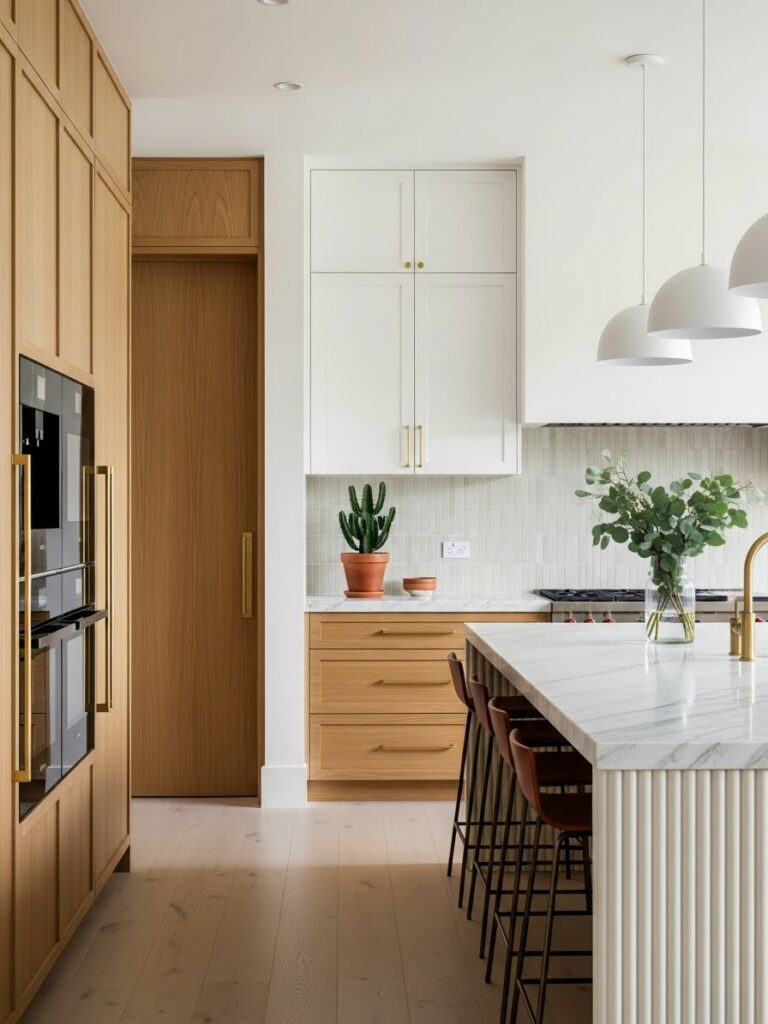
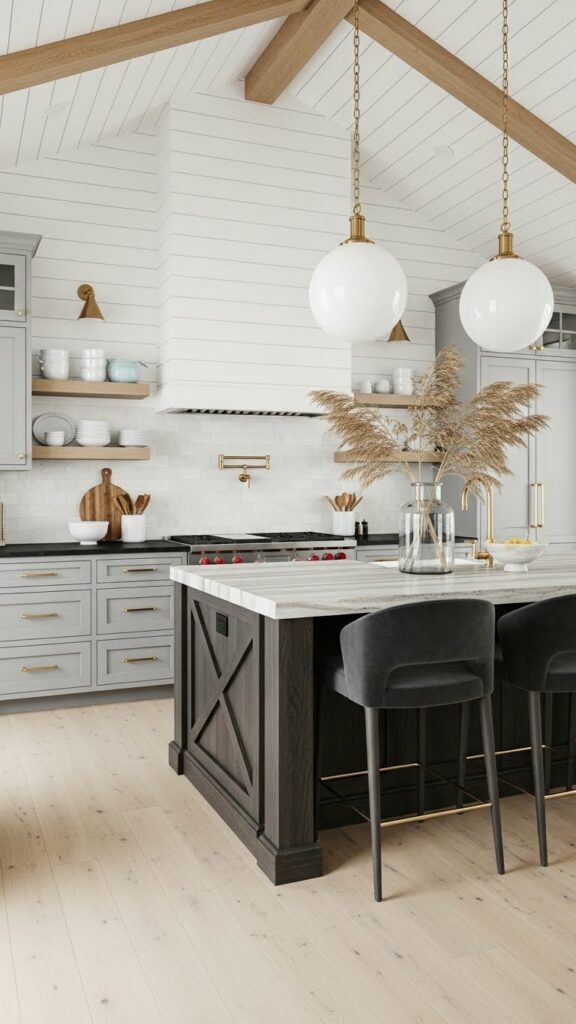
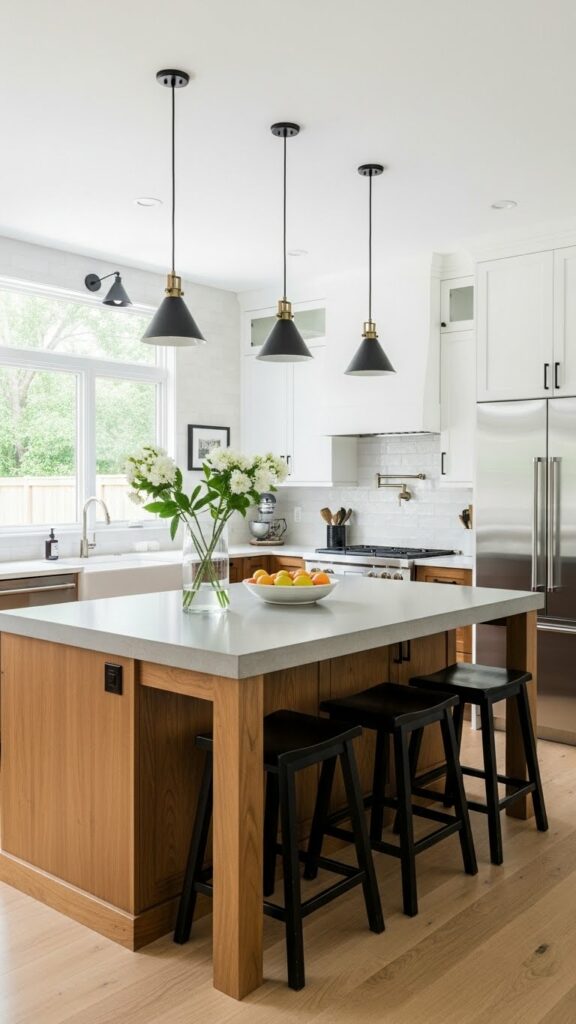
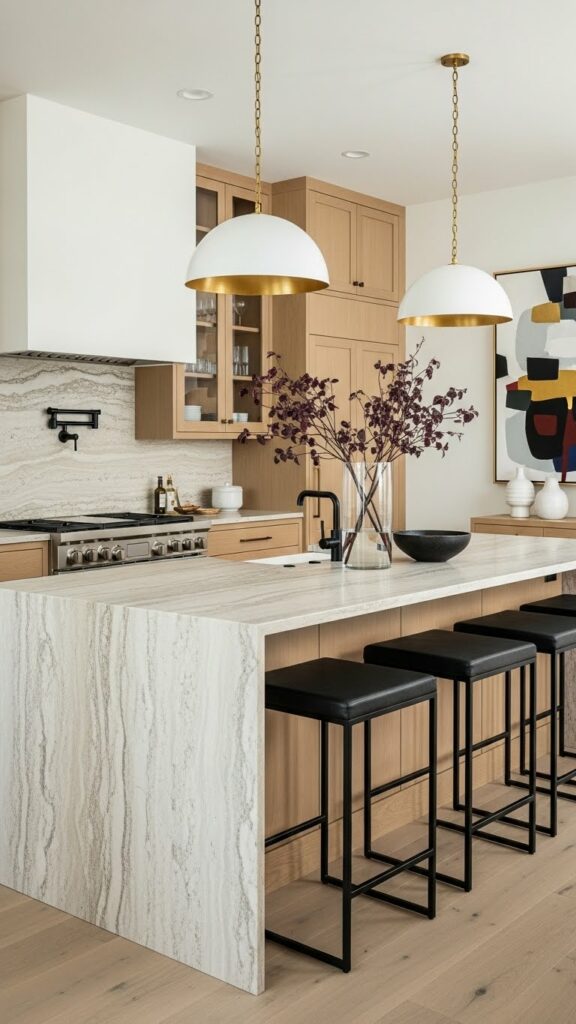
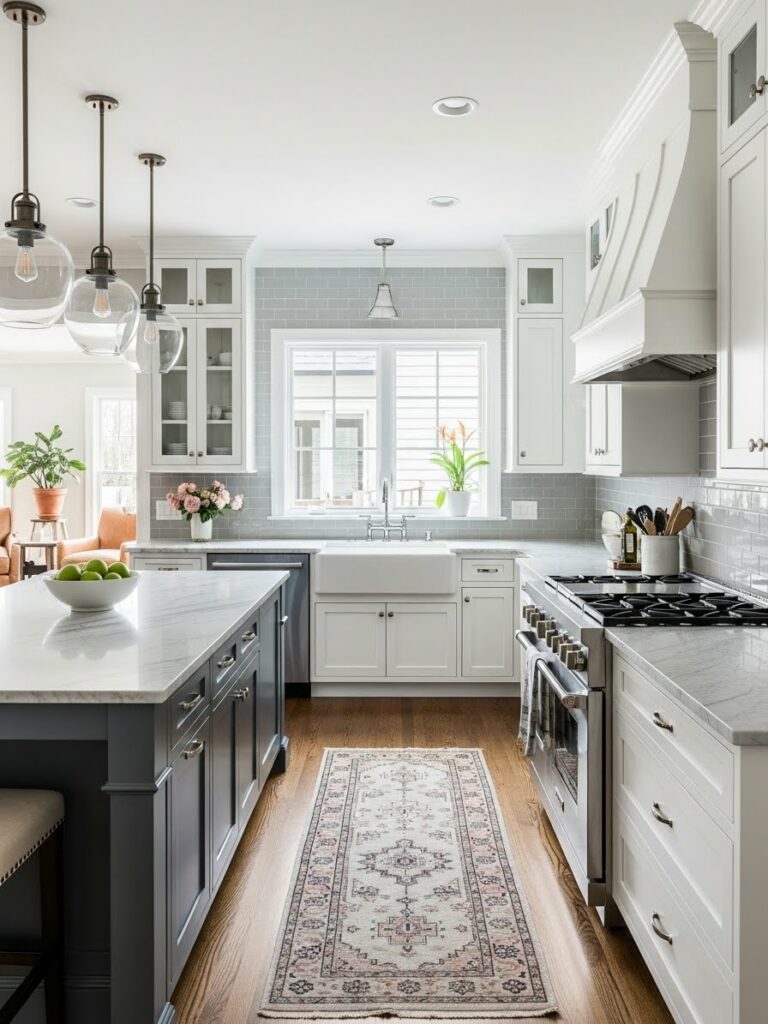
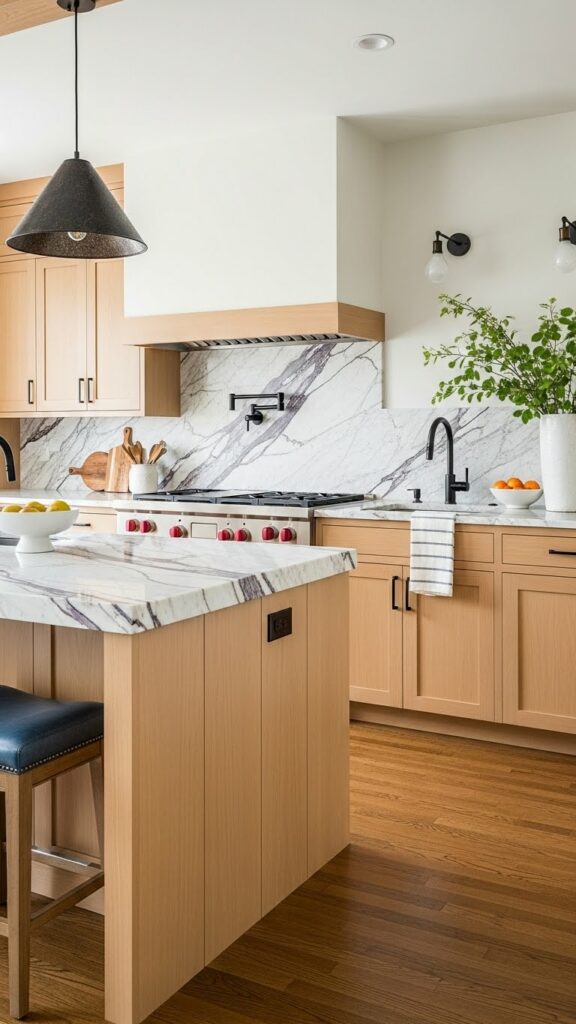
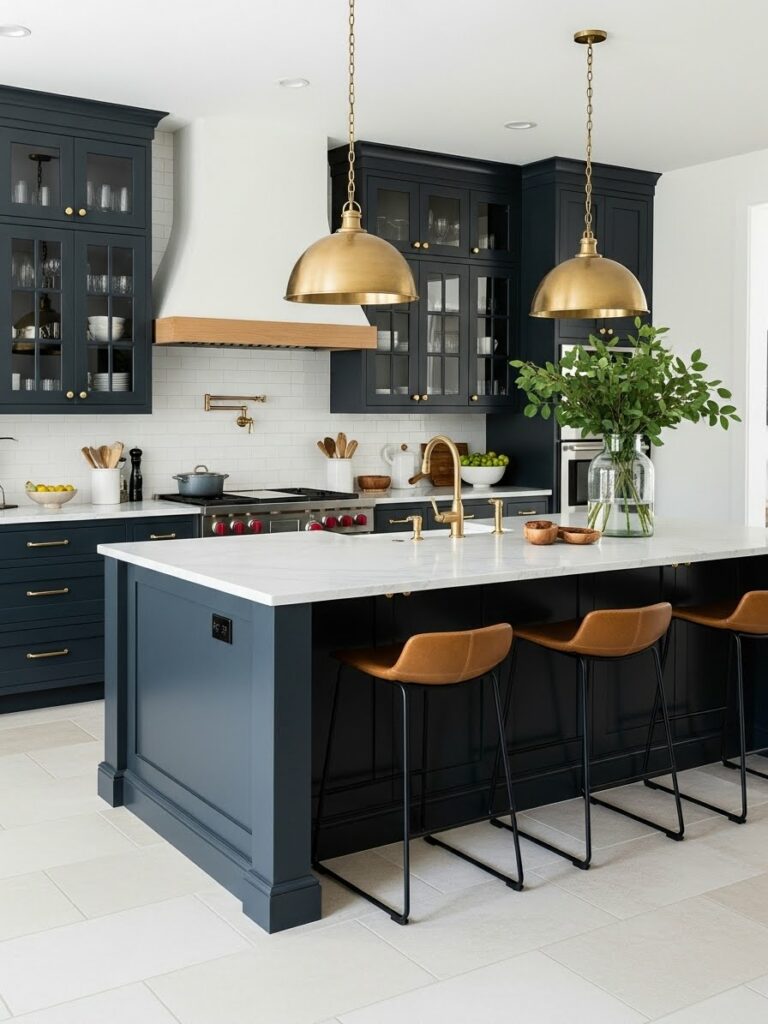
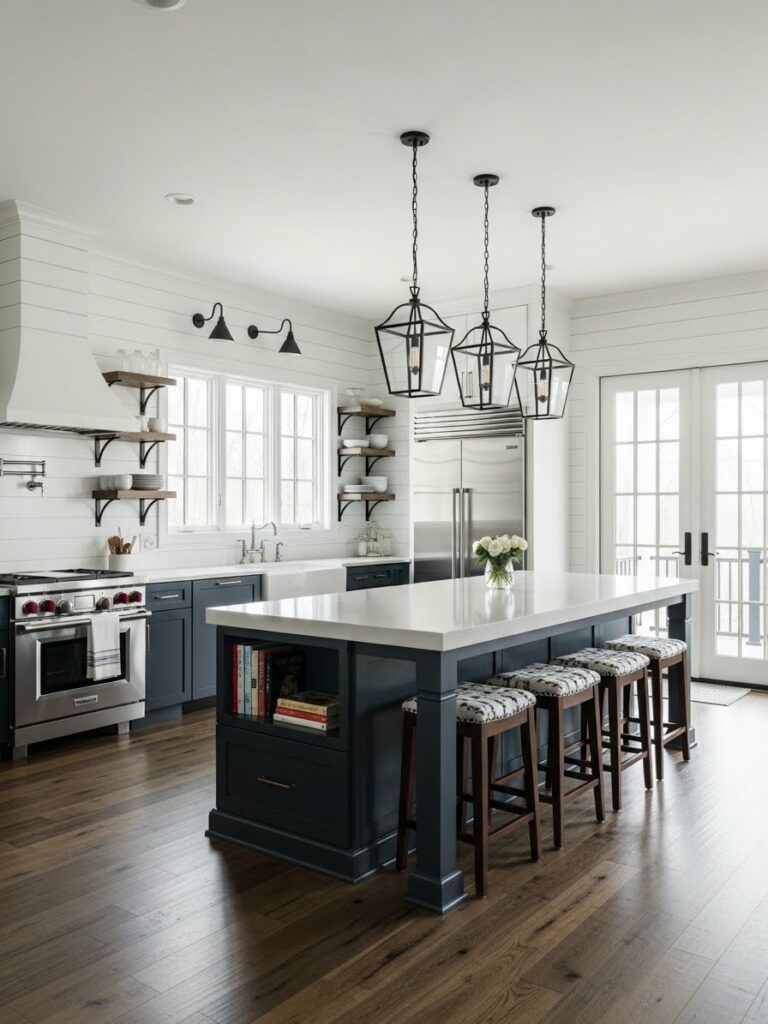
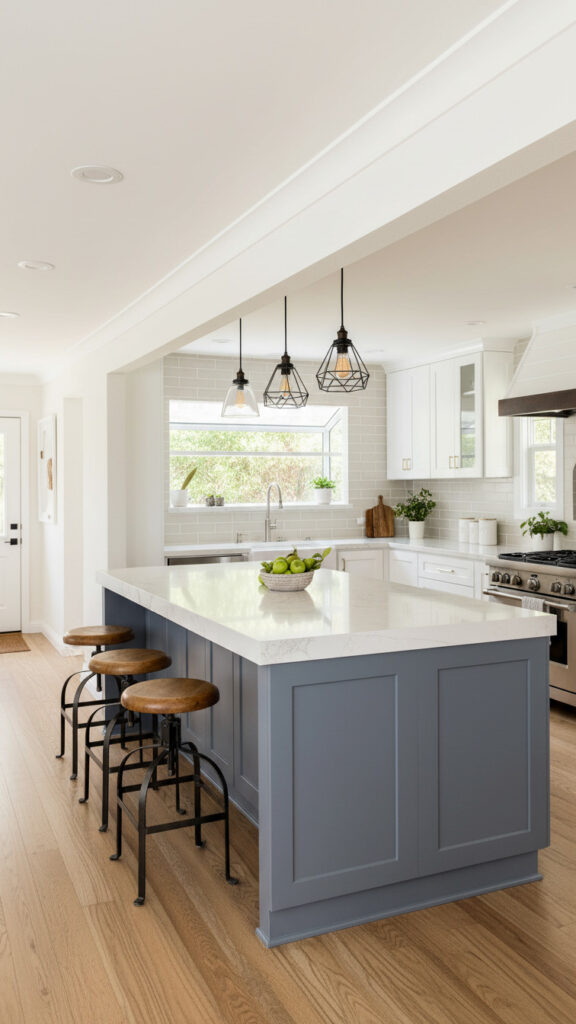
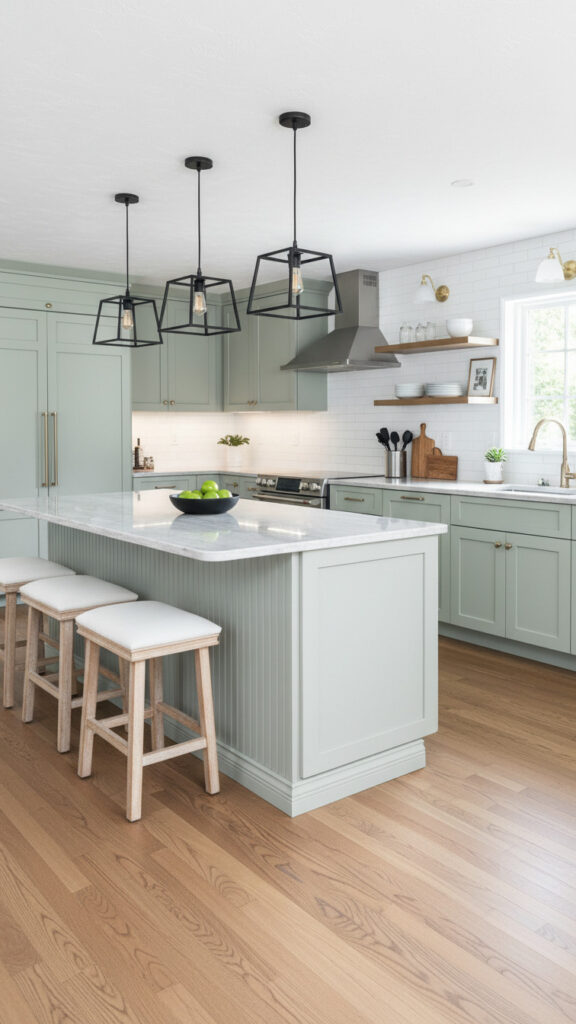
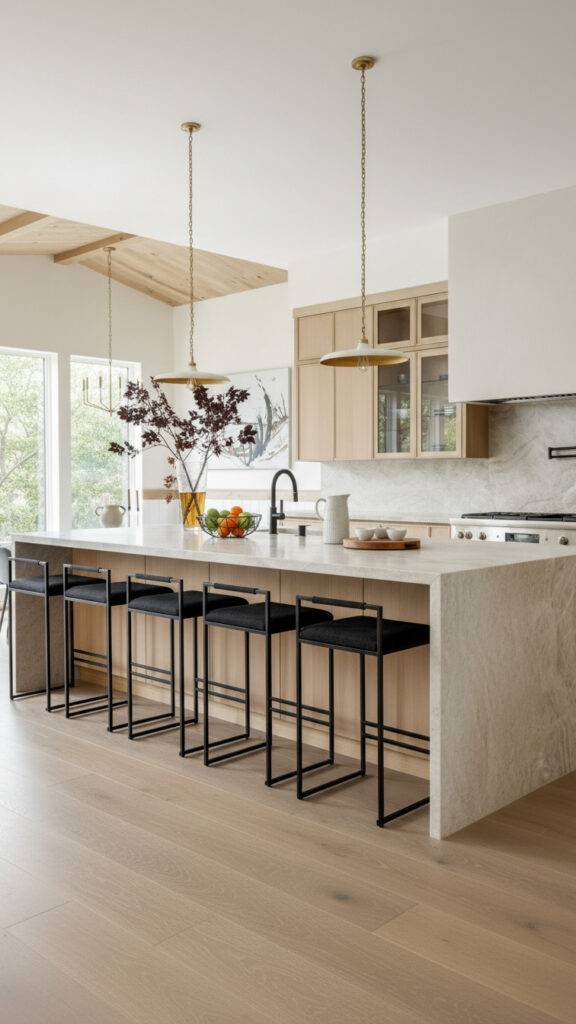
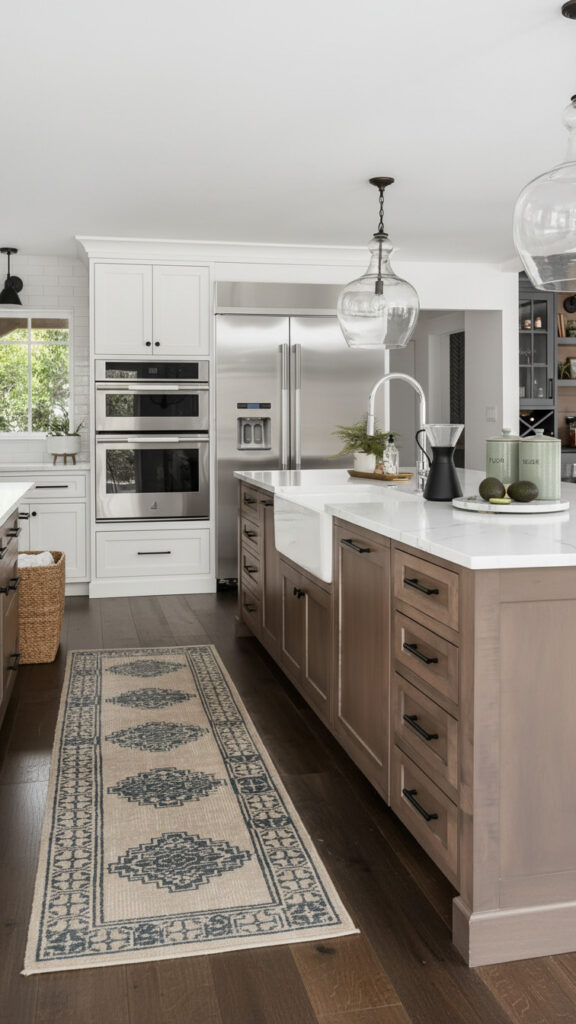
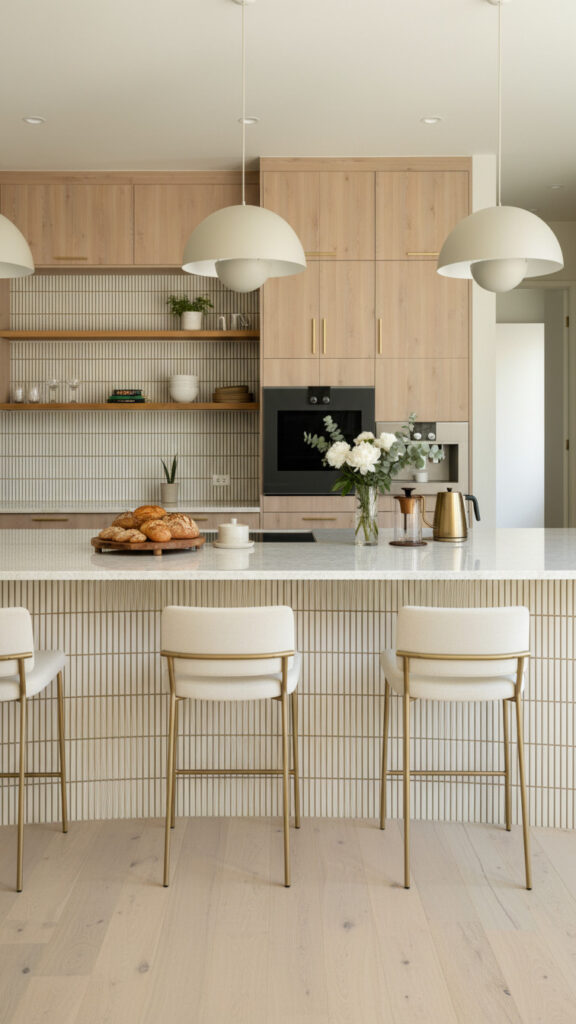

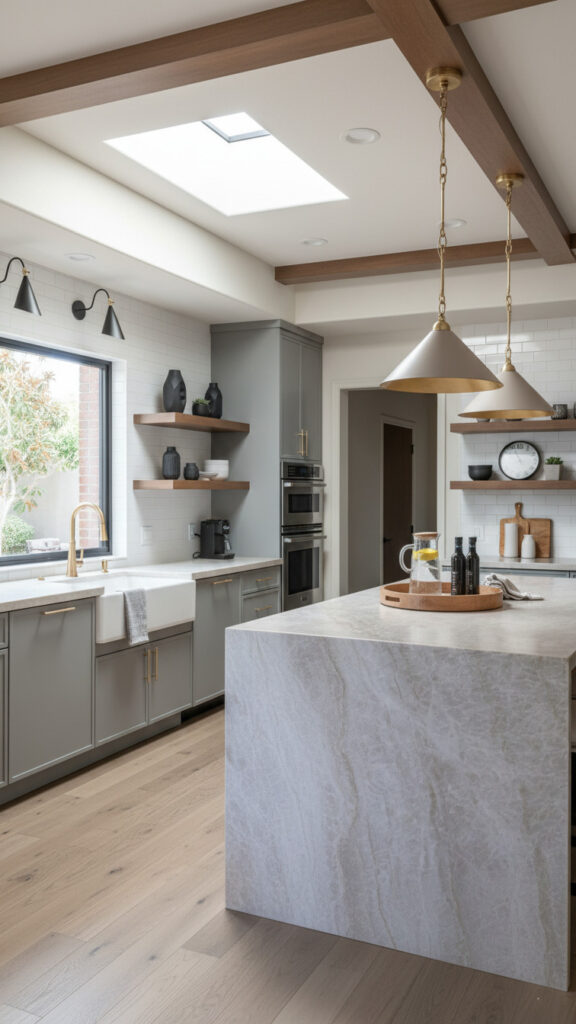
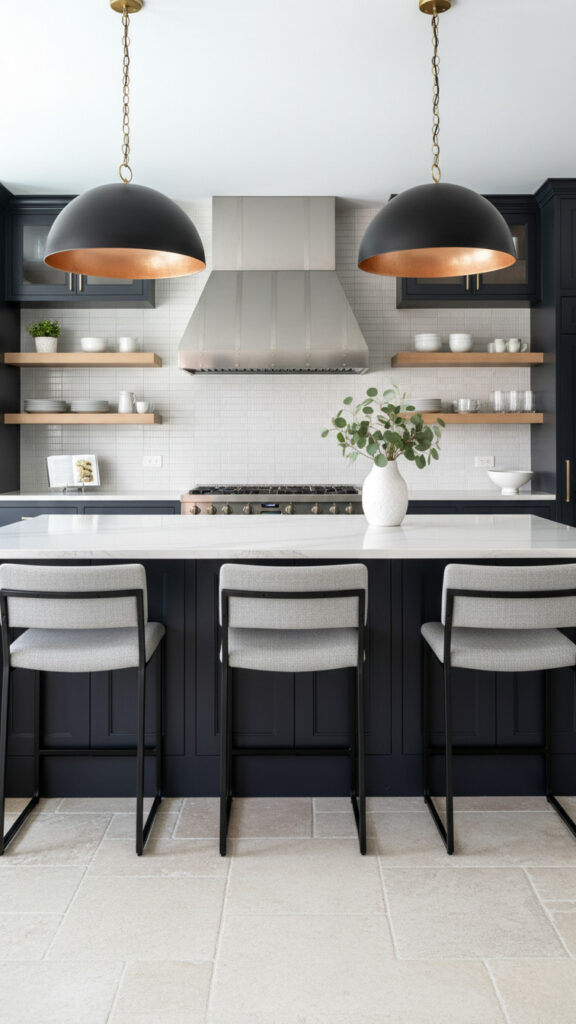
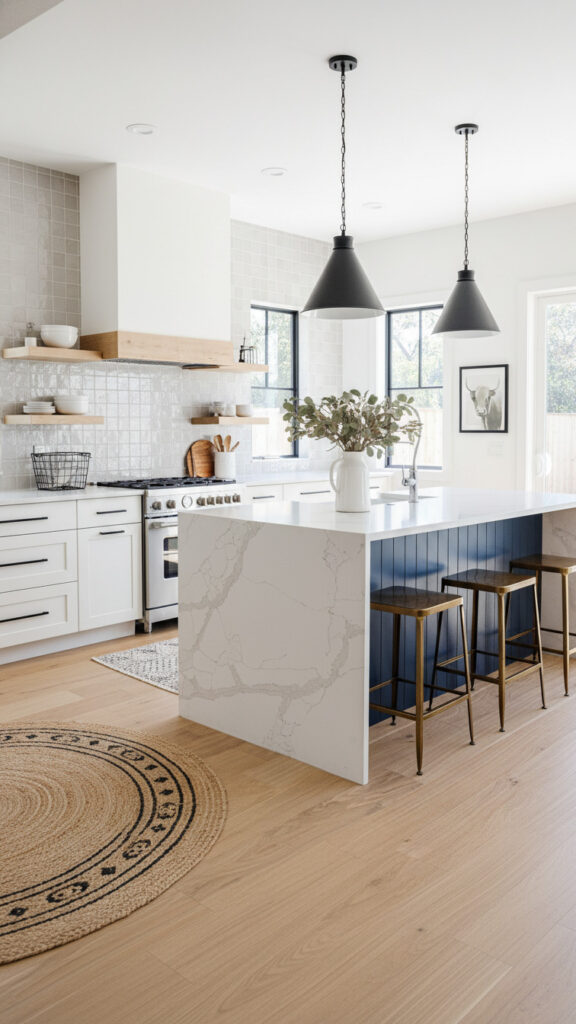

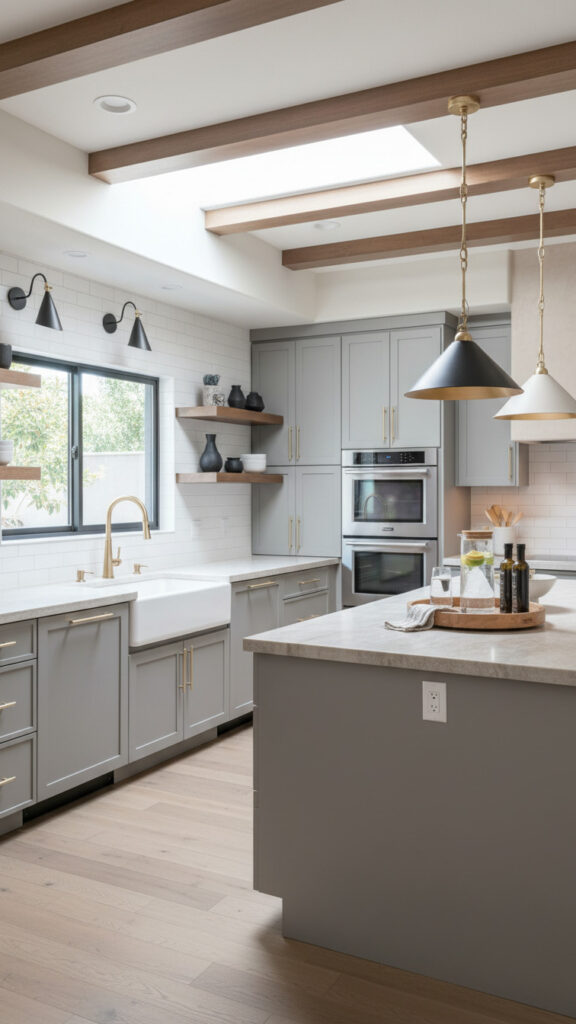
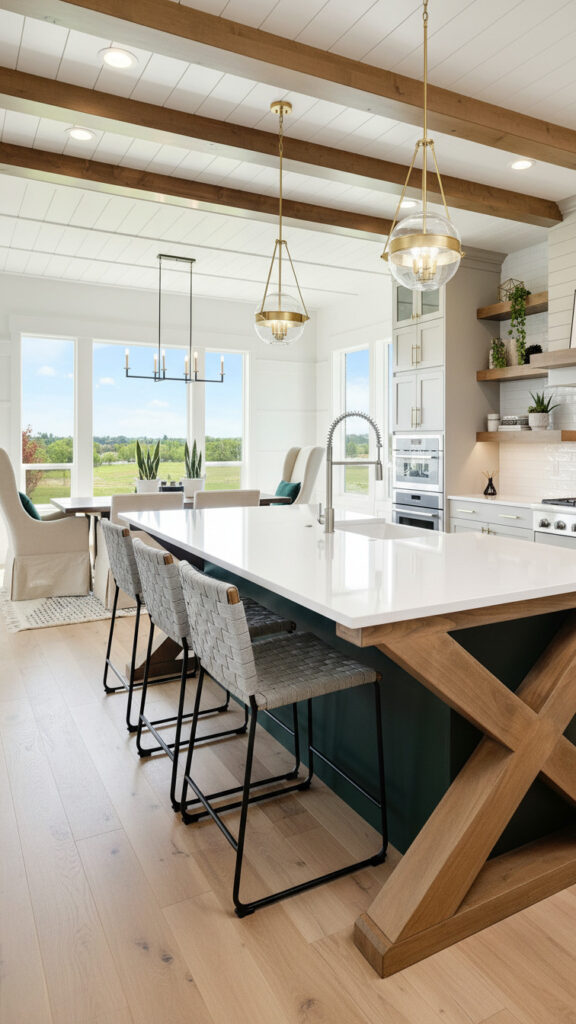
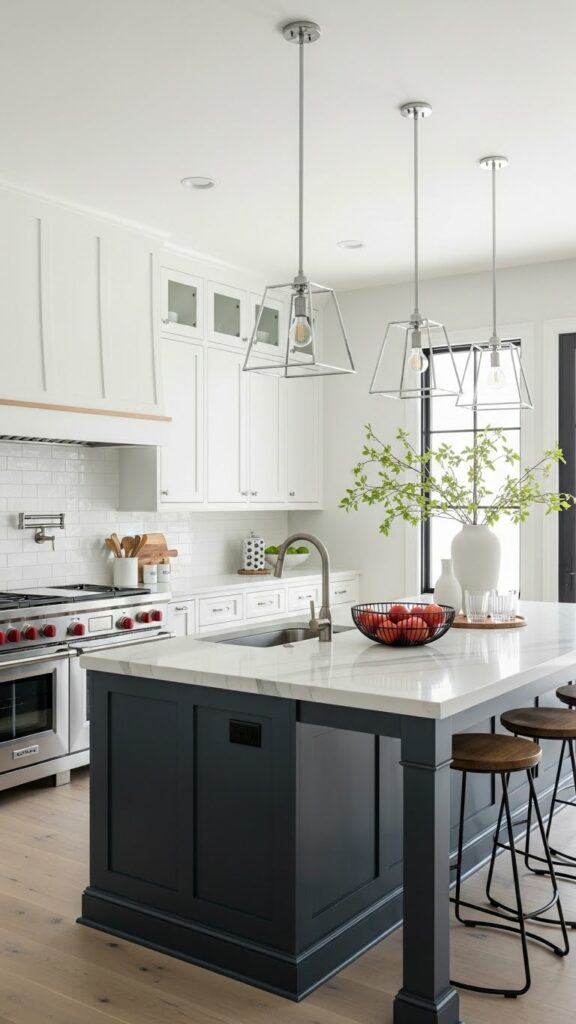
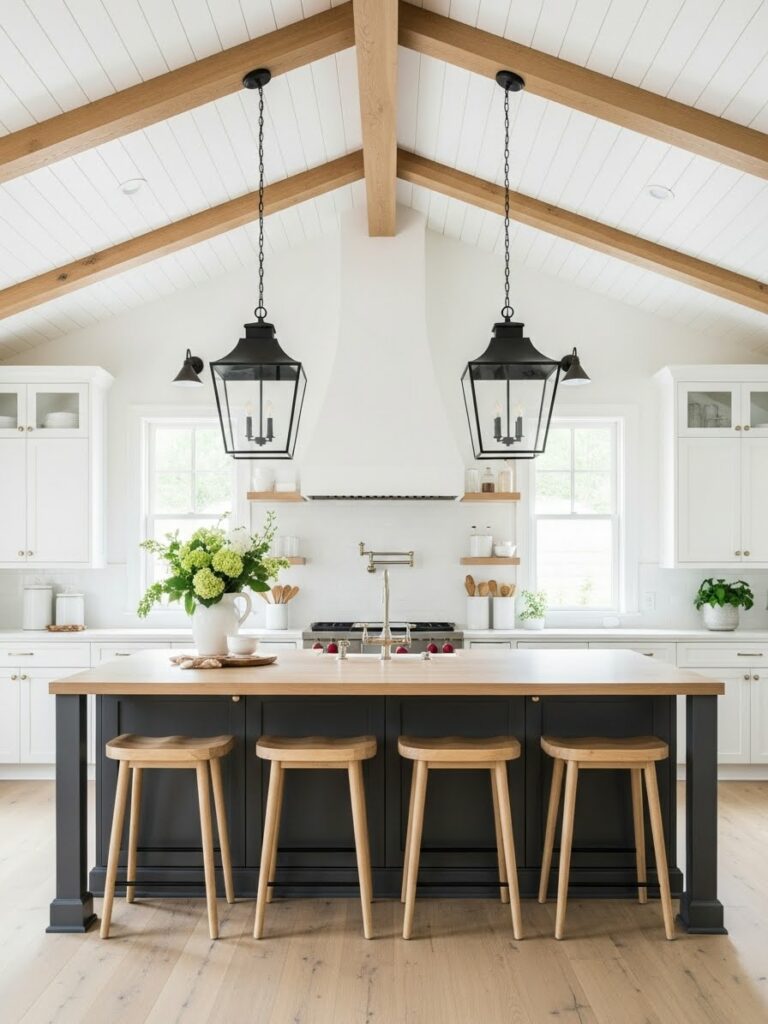
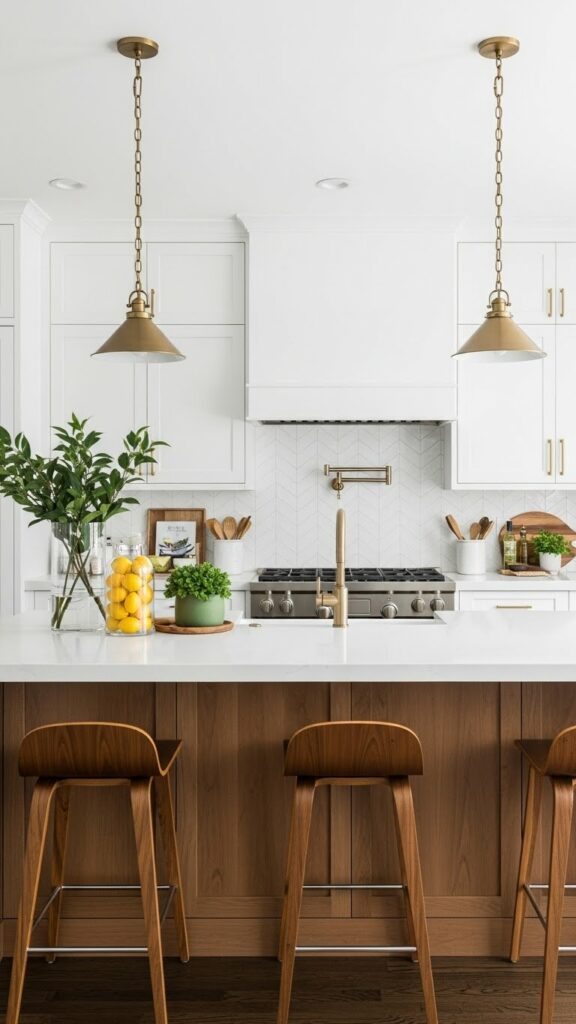
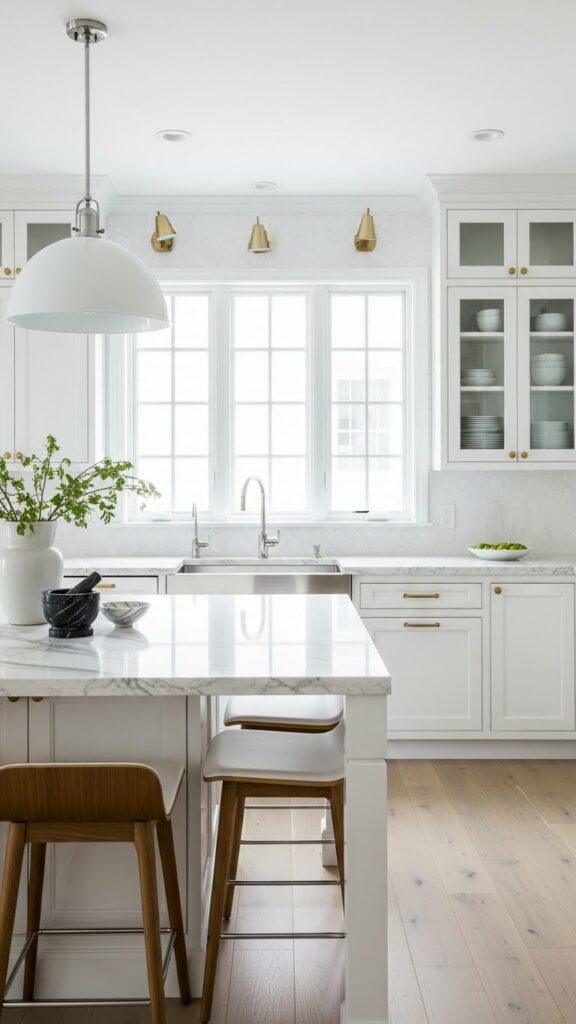
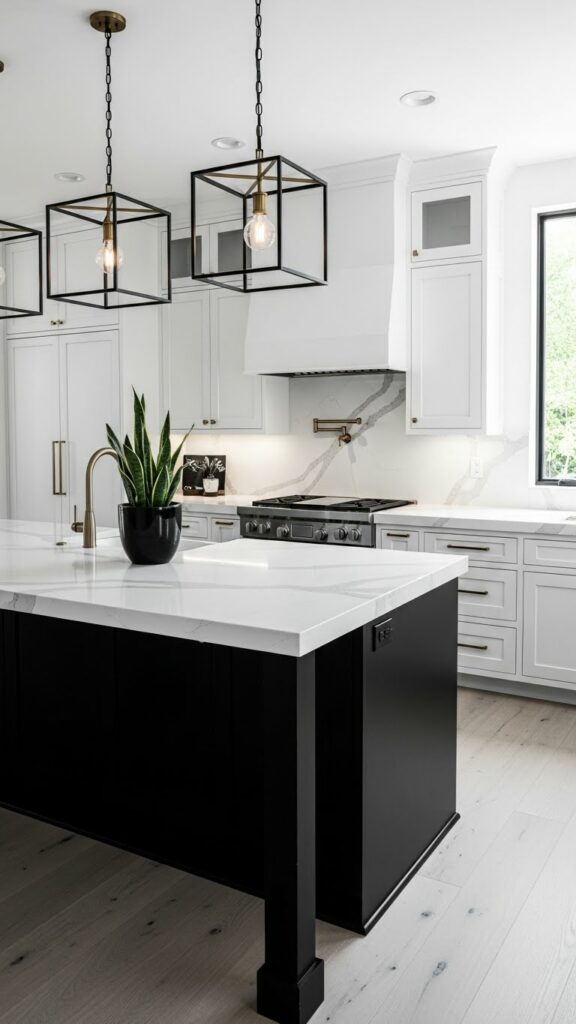
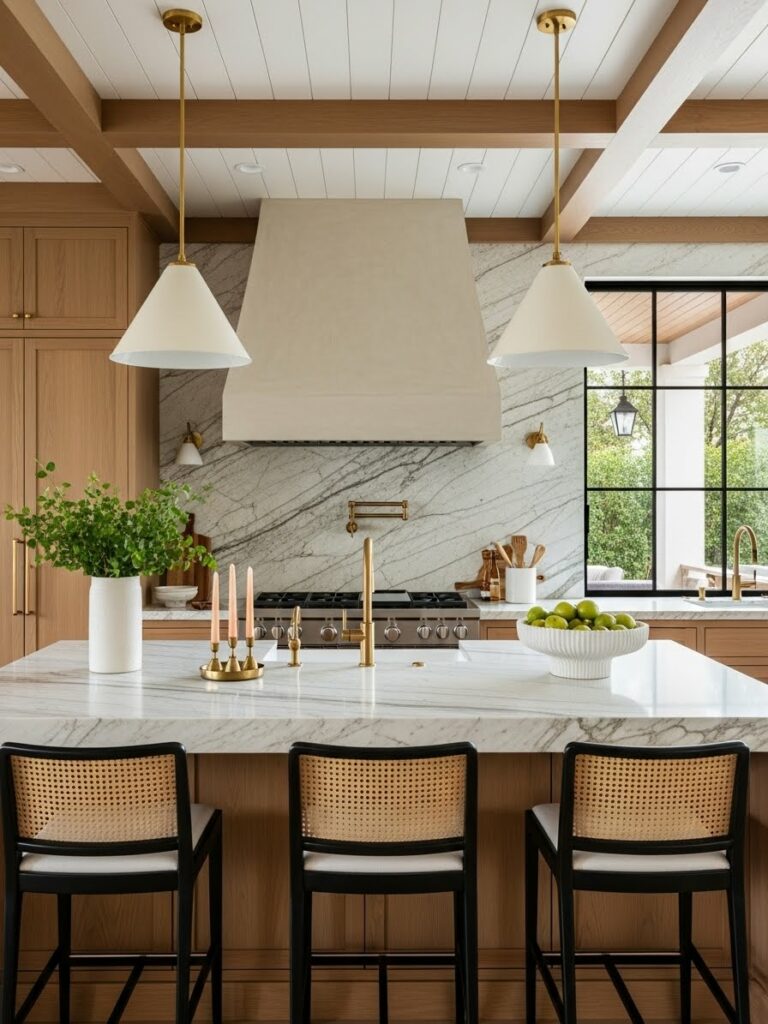
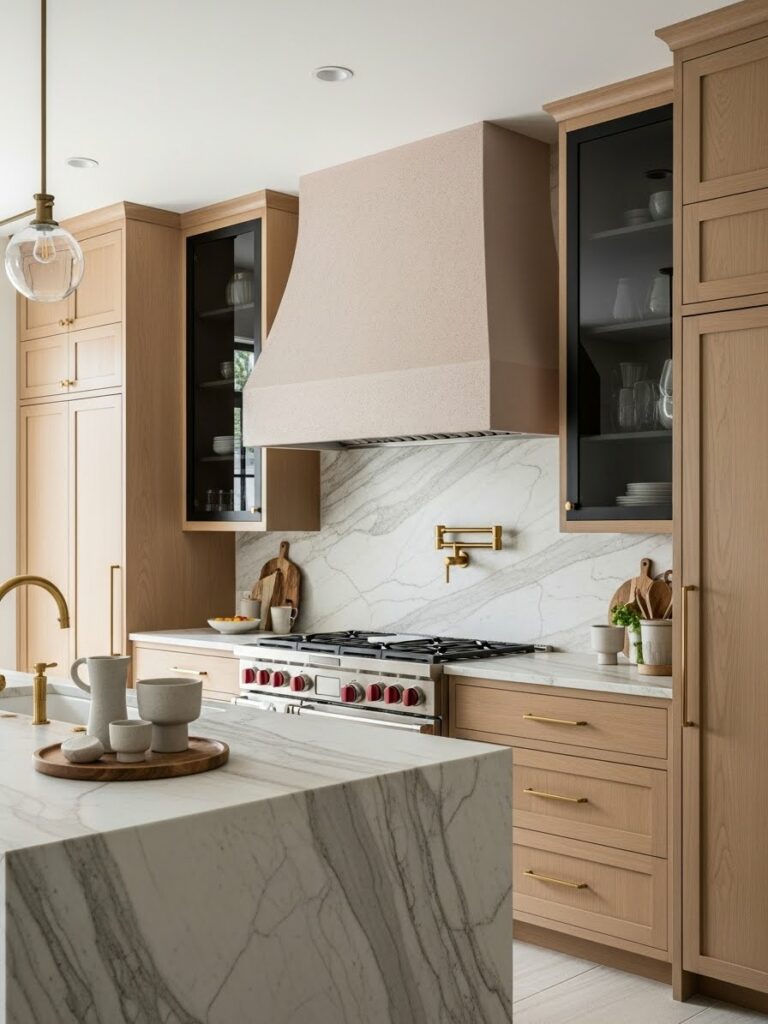
The Core Philosophy: Contrast and Warmth
To master modern farmhouse kitchen designs, you must understand the tension between the old and the new. It is a balancing act.
The “Modern” Aspect:
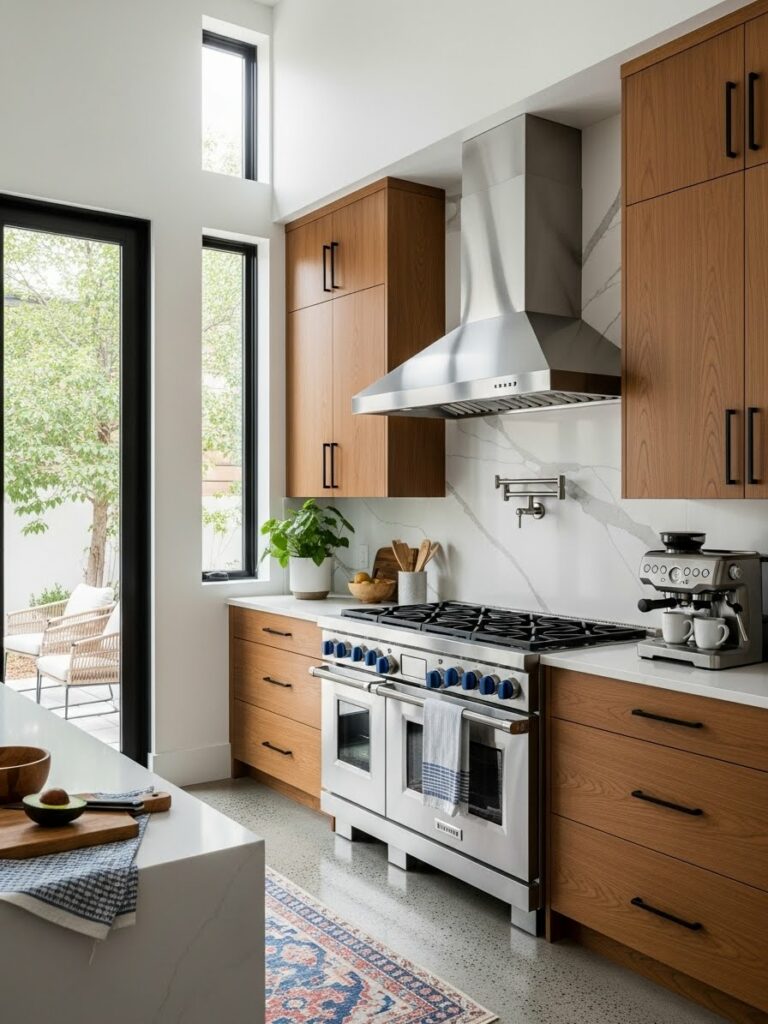
This provides the function. It brings sleek quartz countertops. It brings stainless steel appliances. It brings minimalism and uncluttered surfaces.
The “Farmhouse” Aspect:
This provides the soul. It brings the texture of a reclaimed wood beam. It brings the tactile nature of a handmade tile. It adds history.
When these two forces collide, you get a space that feels curated. It feels lived-in yet polished.
Architectural Bones: Setting the Stage
You cannot simply decorate your way into this look. You must build it. The architecture provides the canvas.
The Ceiling Beam:
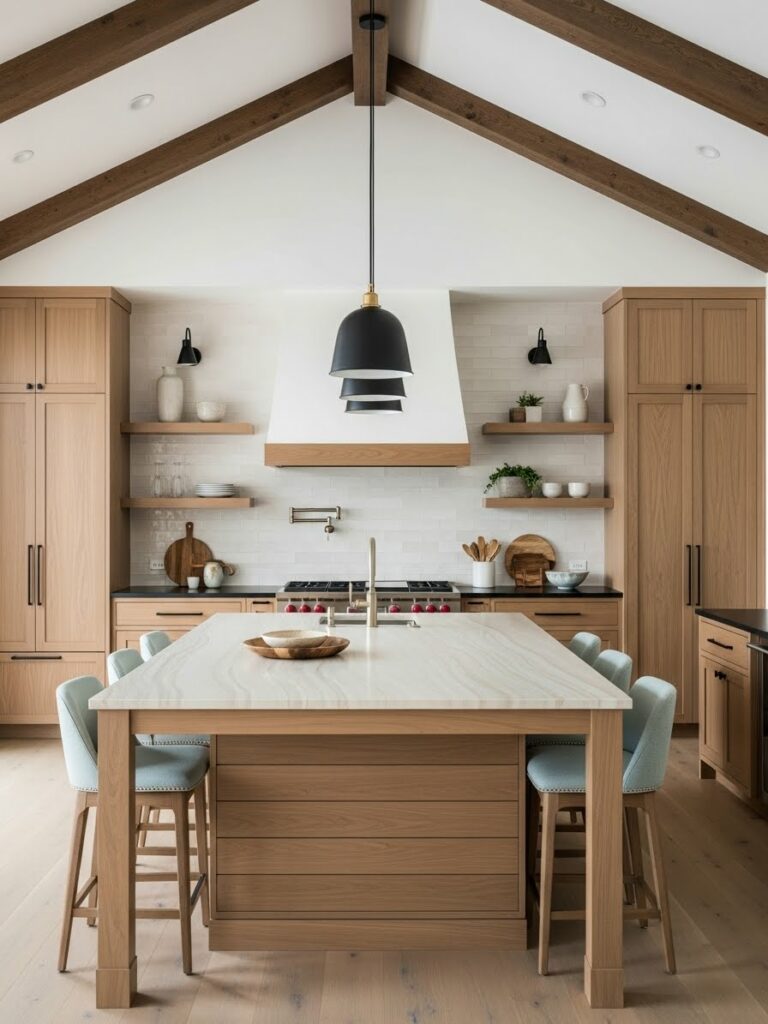
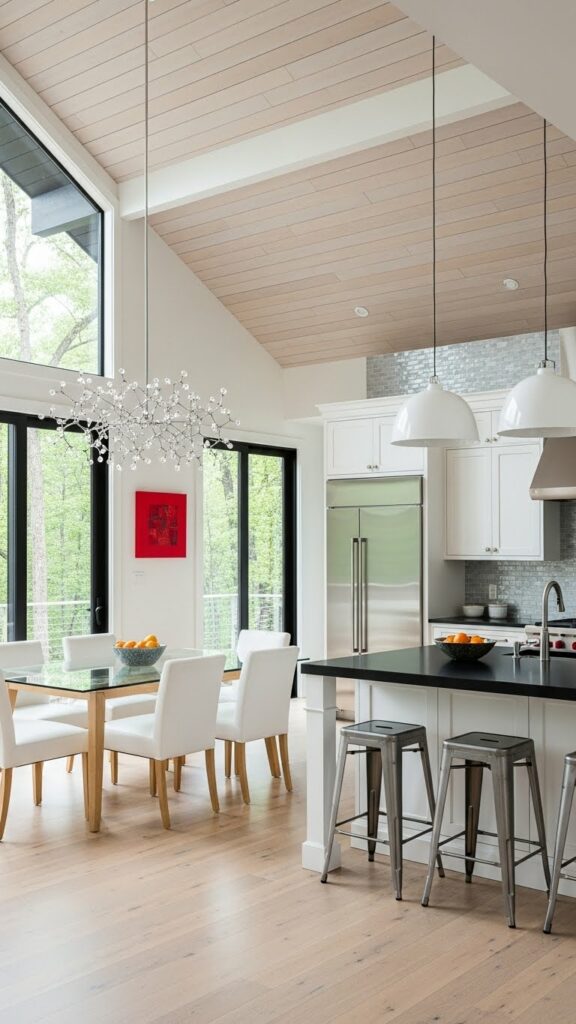
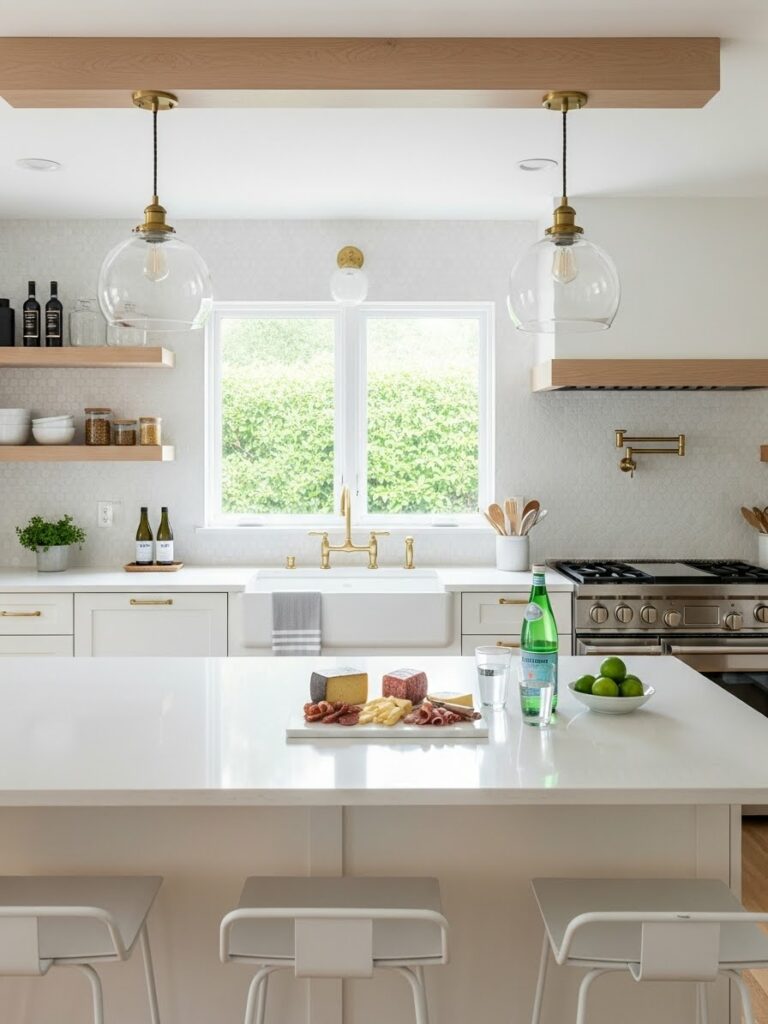
Exposed beams are the hallmark of the farmhouse aesthetic. In modern designs, we prefer them to be structural or high-quality faux wood. Stain them in a light oak tone to keep the room airy.
Vertical Shiplap:
Horizontal shiplap had its moment. Now, vertical V-groove paneling is the trend. It draws the eye upward. It makes standard ceilings feel cathedral-like.
Cabinetry: The Evolution of Shaker
Cabinetry takes up the most visual real estate. The Shaker door is the standard, but it has changed.
The Skinny Shaker:
Designers are moving toward a thinner rail and stile. Instead of the standard 2.5-inch frame, look for a 1-inch or 0.75-inch frame. It is sharper. It is more refined.
Inset vs. Overlay:
For a true high-end farmhouse look, choose inset cabinetry. The door sits flush inside the frame. It looks like custom furniture rather than boxes screw-gunned to the wall.
Palette 1: The Organic Neutral
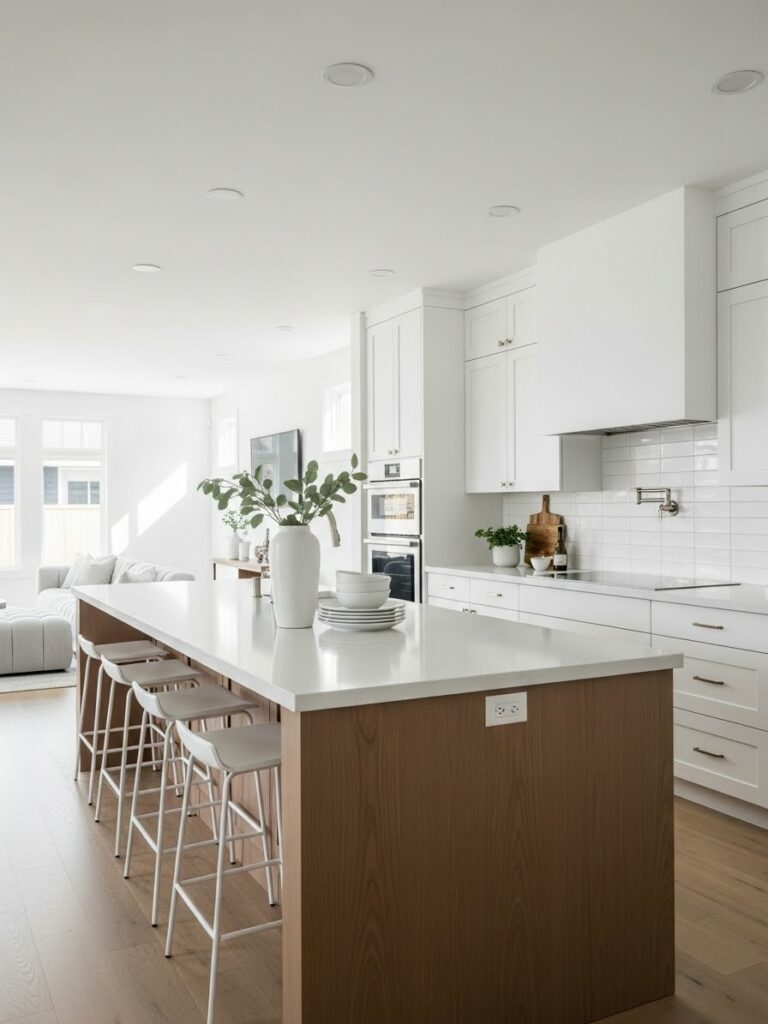
This is the spiritual successor to the all-white kitchen. It uses warmer whites and natural woods to avoid the “hospital” vibe.
The Color Story:
- Creamy White: Like “Swiss Coffee” or “White Dove.”
- Pale Oak: Bleached or natural wood tones.
- Polished Nickel: A warmer alternative to chrome.
Why It Works:
It reflects natural light. It feels expansive. The wood tones ground the space, connecting the kitchen to the outdoors.
Palette 2: The Moody Agrarian
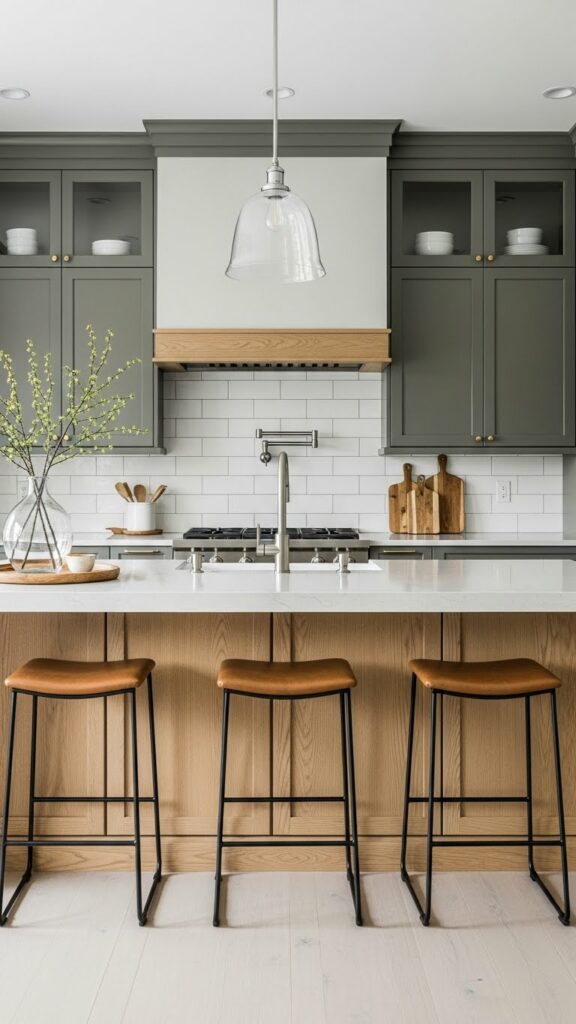
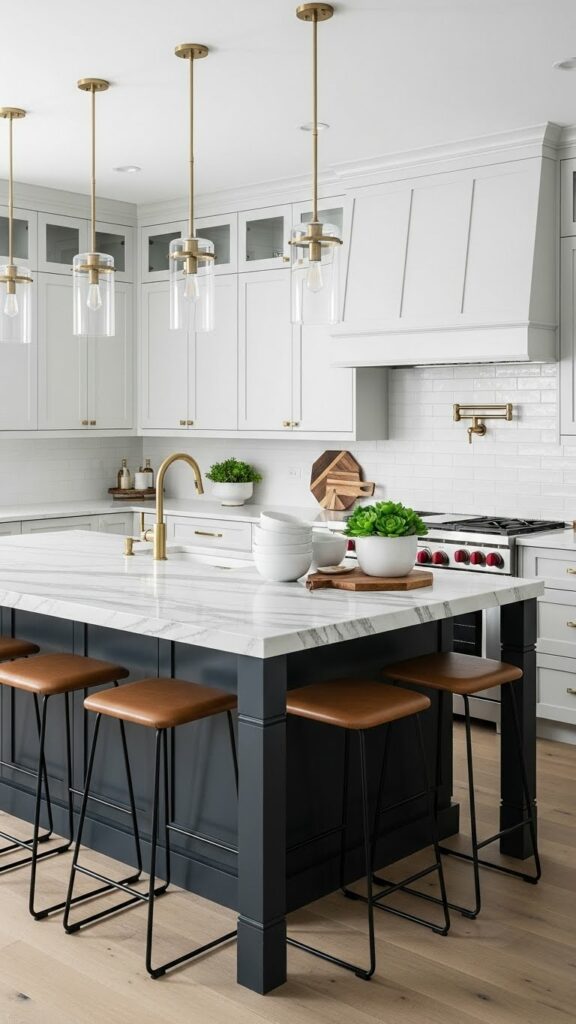
Dark colors are taking over modern farmhouse kitchen designs. They add drama and coziness.
The Color Story:
- Black or Charcoal: For the island or base cabinets.
- Forest Green: A nod to nature.
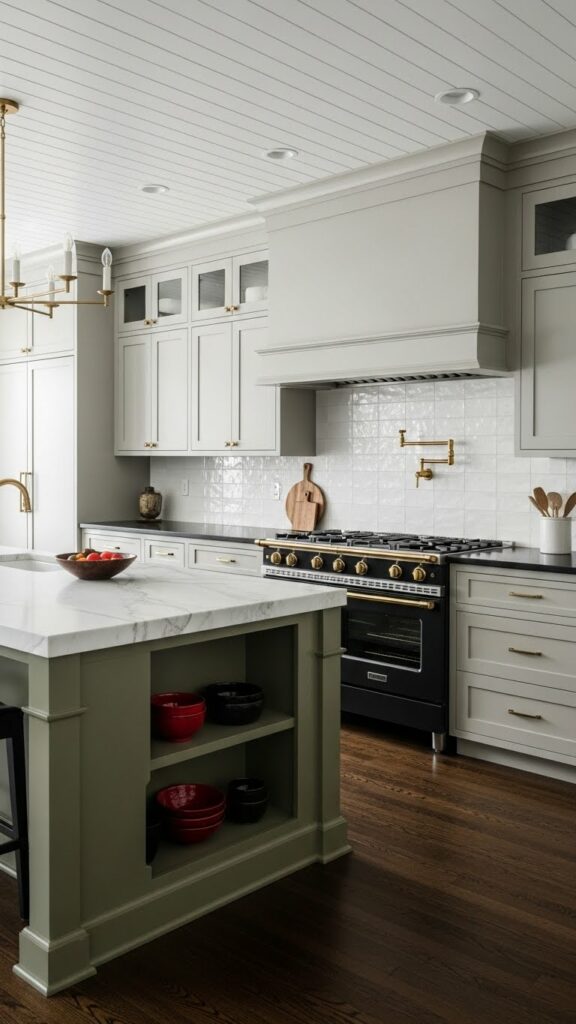
- Unlacquered Brass: Living metal that patinas.
- Soapstone: Charcoal-colored countertops.
Why It Works:
It hides scuffs and dirt better than white. It feels intimate. It creates a striking backdrop for food and flowers.
The Island: Furniture, Not Just Storage
The island is the hub. It should look like a freestanding table that has been repurposed.
Leg Details:
Incorporate turned legs or posts. This furniture-style detailing elevates the island. It makes it feel crafted.
Contrasting Finishes:
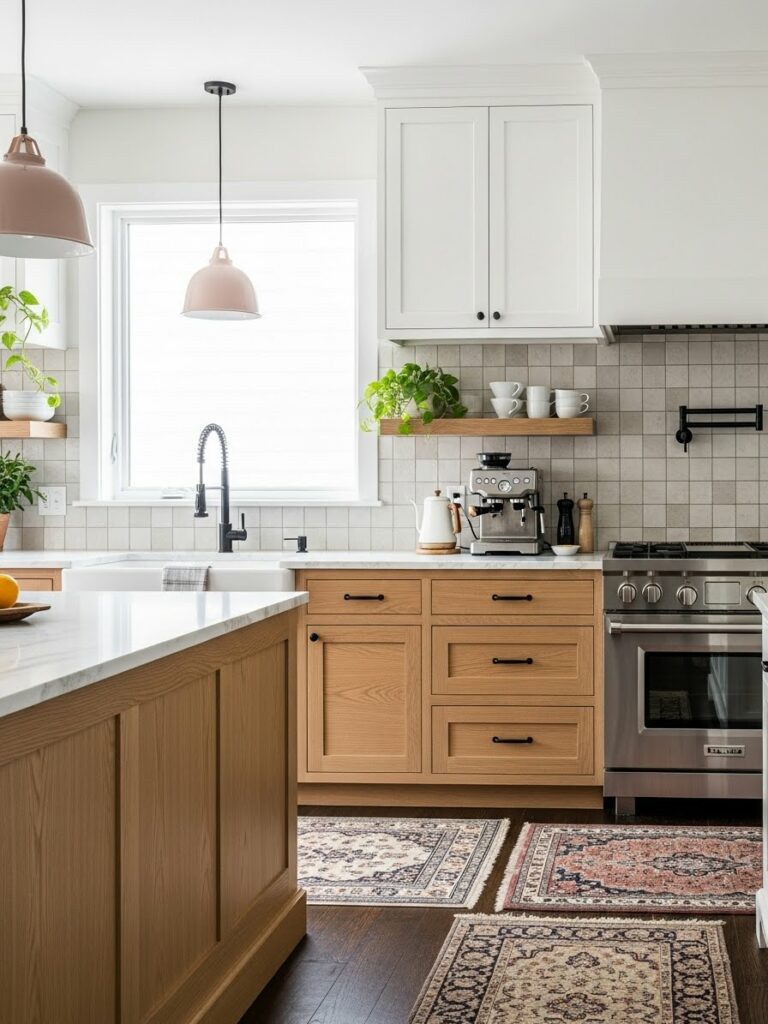
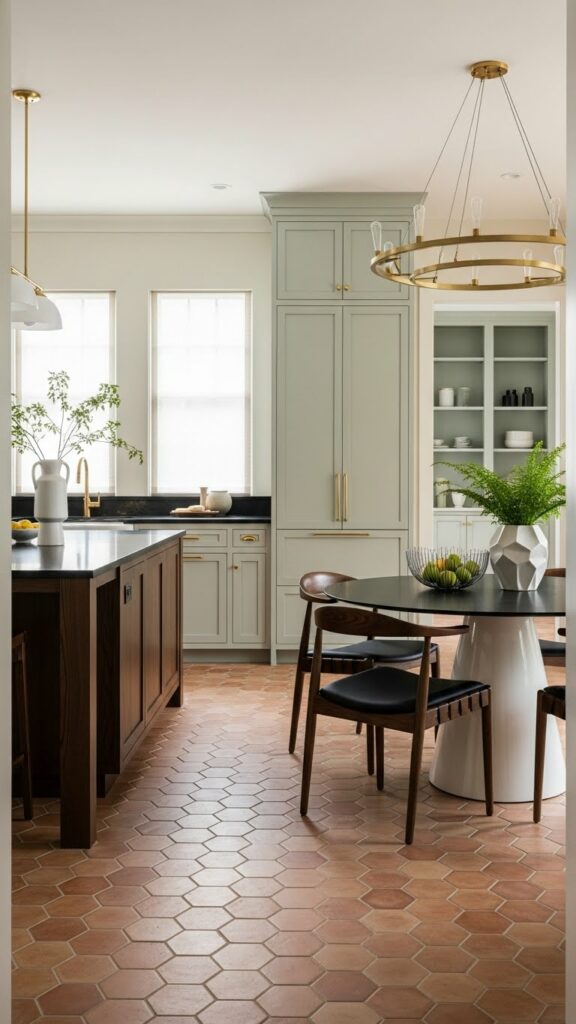
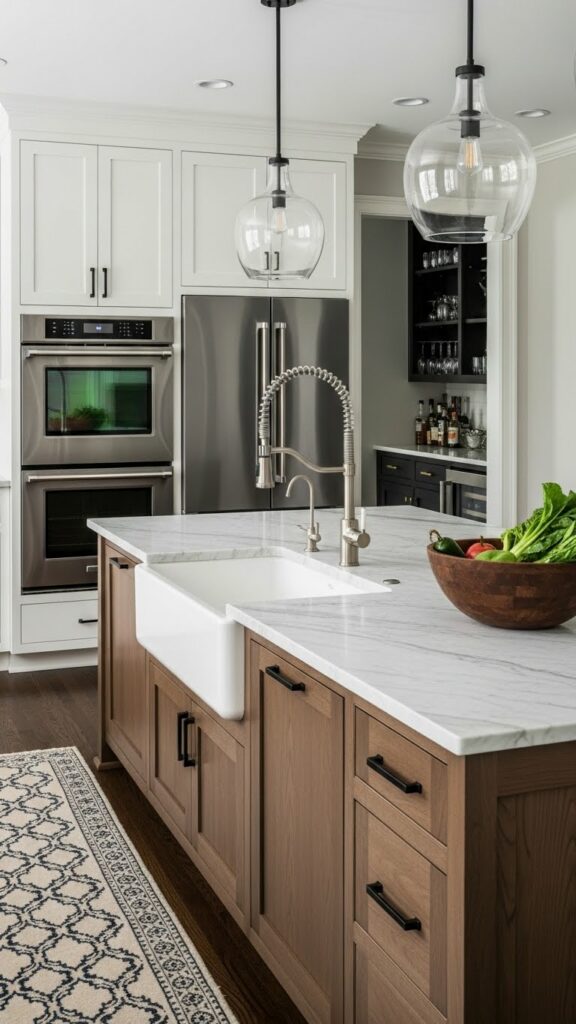
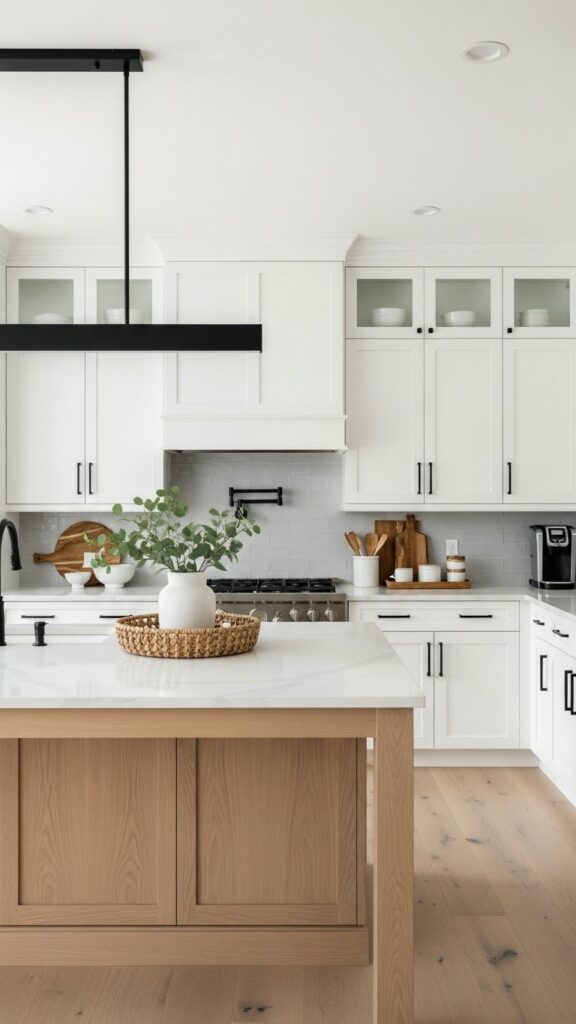
If your perimeter is painted, make the island stained wood. A walnut or white oak island warms up a painted kitchen instantly.
The Sink: The Crown Jewel
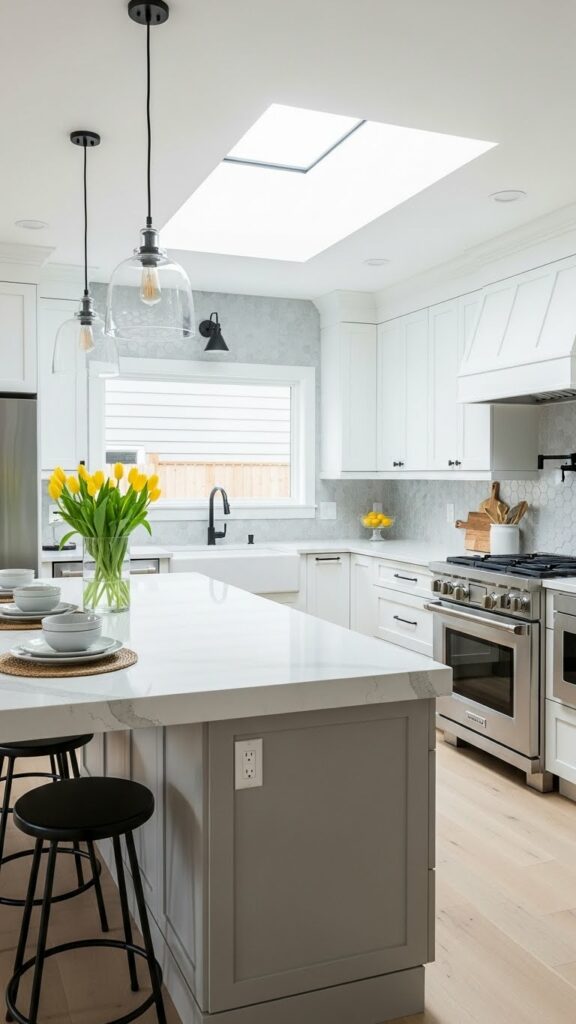
The apron-front sink is iconic. It breaks the horizontal line of the cabinetry. It is ergonomic and beautiful.
Material Options:
Fireclay is the classic white choice. However, modern designs are embracing granite composite in matte black or charcoal. It looks sleek and industrial.
The Workstation Sink:
Look for sinks with built-in ledges. They hold cutting boards and colanders. This merges farm-style looks with chef-grade utility.
Countertops: Marble vs. The Alternatives
Carrara marble is the dream, but it etches. Red wine and lemon juice are its enemies. Farmhouse kitchens need durability.
Quartz:
Select a quartz with long, dramatic veining. It mimics marble but is non-porous. It requires zero sealing.
Honed Granite:
Standard granite is speckly and dated. “Honed” (matte) granite looks like slate or soapstone. Jet Mist granite is a perfect soapstone dupe.
Backsplash: Texture Over Pattern
Subway tile is safe. But modern farmhouse kitchen designs are moving toward texture.
Zellige Tile:
These Moroccan tiles are handmade. Each one is slightly different. The surface is uneven. This reflects light in a shimmering, organic way.
Brick Veneer:
Paint thin brick veneer white. This adds massive texture without introducing a new color. It feels historical and industrial.
Flooring: Wide and Warm
The floor grounds the room. Wide plank hardwood is the gold standard.
European White Oak:
This wood species has a neutral, cool undertone. It avoids the orange/yellow hues of the 90s. Use a matte oil finish.
Patterned Brick:
For mudrooms or pantry areas, use brick pavers. Lay them in a herringbone pattern. It is durable enough for muddy boots and looks incredible.
Lighting: The Industrial Edge
Lighting is the jewelry. Farmhouse lighting tends to be oversized and industrial.
The Pendant Trio:
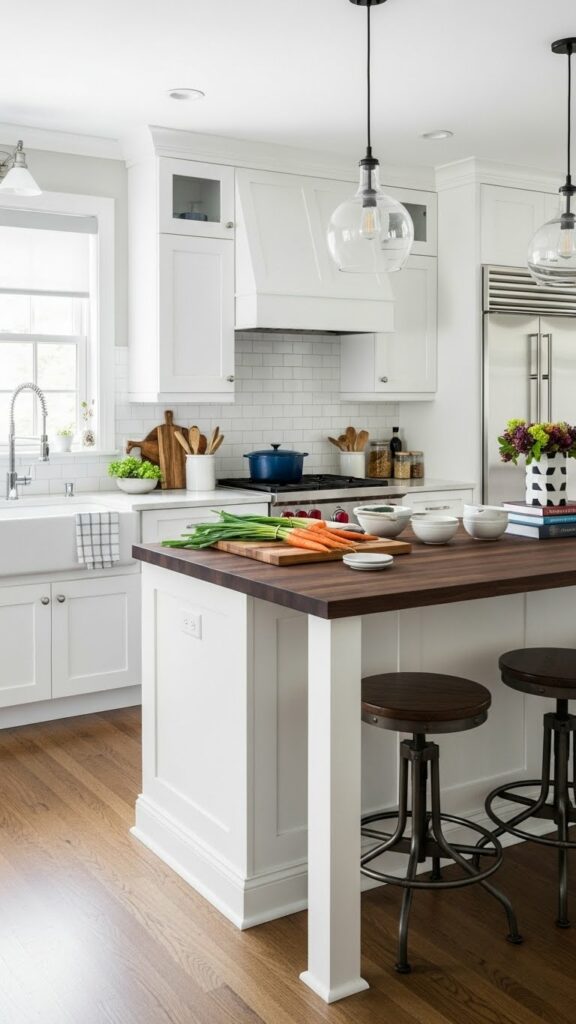
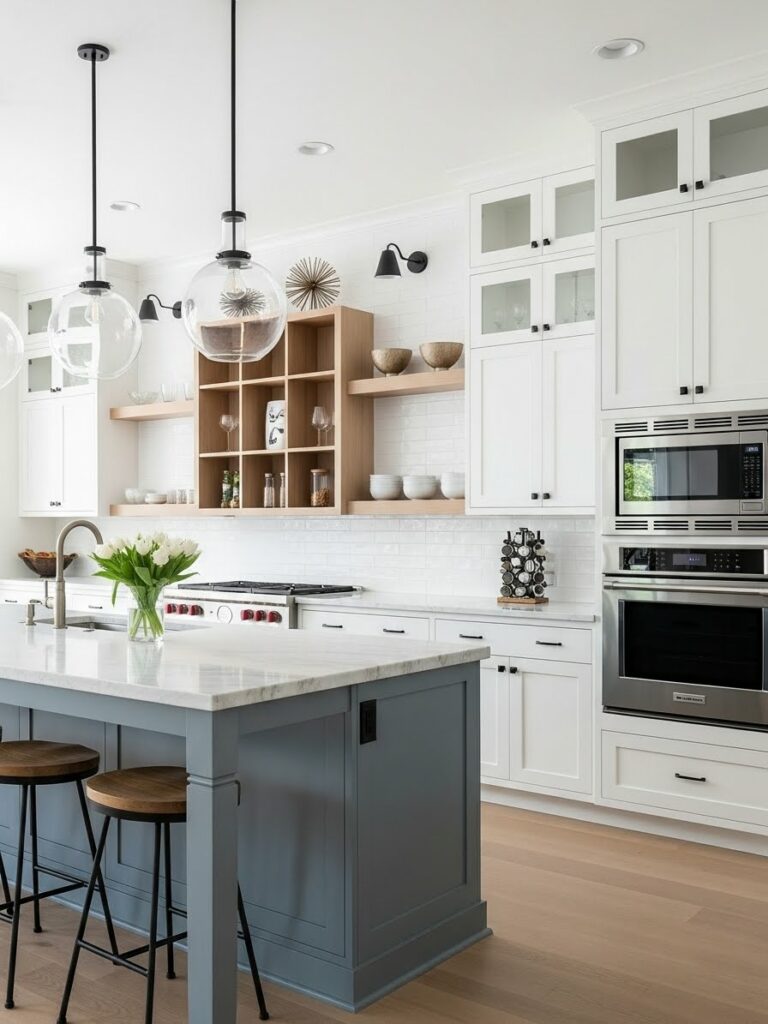
Hang large metal domes over the island. Matte black is a strong choice. Brass adds warmth.
The Sconce:
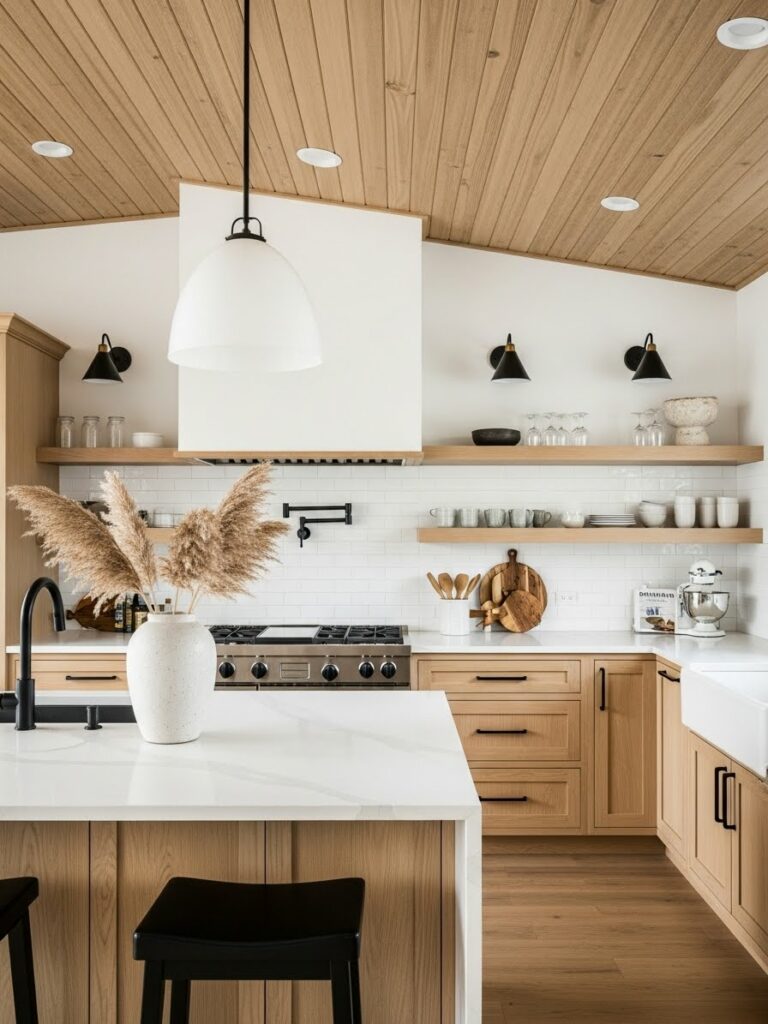
Install gooseneck sconces above the sink window or open shelves. It creates a library-like atmosphere in the kitchen.
Hardware: Mixing Metals
Do not match everything. A uniform look can feel flat. Mixing metals adds depth.
The Formula:
Pair stainless steel appliances (cool) with brass hardware (warm). Use matte black light fixtures to bridge the gap.
The Cup Pull:
Use bin pulls (cup pulls) on drawers. They are ergonomic and historically accurate. Use simple round knobs on doors.
Open Shelving: A Curated Display
Open shelving makes the kitchen feel airy. It forces you to be organized.
Wood Choice:
Use thick, reclaimed wood shelves. The rough texture contrasts beautifully with the smooth drywall or tile.
Bracket Style:
Use heavy iron brackets for an industrial look. Or, use floating brackets for a cleaner, modern look.
The Range Hood: A Focal Point
Stop settling for the microwave over the stove. Modern farmhouse kitchen designs demand a custom hood.
Plaster Hoods:
A tapered hood covered in plaster looks seamless. It mimics old masonry hearths.
Wood Wrapped:
Cover the hood vent in shiplap or stained wood. Add a reclaimed beam to the bottom edge for detail.
The Pantry: Hidden Charm
Even the door to your pantry is a design opportunity. It breaks up the wall of cabinetry.
Antique Doors:
Hunt for a vintage door at an architectural salvage yard. Strip it to raw wood. The imperfections tell a story.
Screen Doors:
For a whimsical touch, use a wooden screen door. Paint it a fun color like robin’s egg blue. It adds ventilation and charm.
The Coffee Station Nook
Dedicate a zone to caffeine. This keeps the main counters clear of machines.
Cabinet Garage:
Use an “appliance garage” cabinet. The doors sit on the countertop and open to reveal the coffee maker. Close them to hide the clutter.
Mug Storage:
Install a peg rail under a shelf to hang your favorite mugs. It is functional art.
Window Treatments: Softening the Lines
Kitchens have many hard surfaces. Stone, wood, metal. You need fabric to soften the acoustics and the look.
Woven Shades:
Use bamboo or seagrass roman shades. The natural texture filters the light perfectly.
Cafe Curtains:
Hang a small curtain on the bottom half of the window. Use linen. It provides privacy while letting light in the top.
Decor: The Final Layer
Styling distinguishes a house from a home. Avoid kitschy signs. Go for functional decor.
Wooden Cutting Boards:
Lean a collection of boards against the backsplash. Different shapes and wood tones create a collage of warmth.
Vintage Runners:
Place a faded Turkish rug between the island and the sink. It adds pattern and comfort underfoot.
The Scullery Trend
If space allows, the modern farmhouse includes a scullery or “dirty kitchen.” This is a small room behind the main kitchen.
It houses the messy prep work. It hides the dirty dishes during a party. It keeps the main kitchen pristine for entertaining.
Small Kitchen Solutions
You can achieve modern farmhouse kitchen designs in compact spaces too.
Pot Racks:
Hang a copper pot rack from the ceiling or wall. It frees up cabinet space and looks professional.
Open Islands:
Use a butcher block table with open shelves underneath instead of a solid block island. It feels lighter visually.
Common Design Mistakes
1. Sliding Barn Door Overload:
One barn door is a statement. Three is a theme park. Use them sparingly.
2. Faux Distressing:
Avoid furniture that looks like it was beaten with chains in a factory. Let natural wear happen over time.
3. Matching Everything:
Don’t buy the entire matching suite of furniture. Mix a vintage stool with a modern table. The mix makes it authentic.
Budget-Friendly Upgrades
Paint is powerful. Painting existing cabinets “greige” (grey-beige) instantly modernizes them.
Swap the faucet. A high-arc bridge faucet costs a few hundred dollars but changes the focal point of the room.
Add beadboard. A sheet of beadboard paneling is cheap. Glue it to the side of your island or backsplash for instant texture.
Conclusion: Timeless Appeal
Implementing modern farmhouse kitchen designs is an investment in longevity. This style is not a fleeting trend.
It is rooted in the basics: wood, stone, metal, and light. It celebrates the utility of the kitchen while honoring the comfort of the home.
Whether you go moody and dark or bright and airy, the principles remain. Keep it honest. Keep it functional. And always, keep it warm.