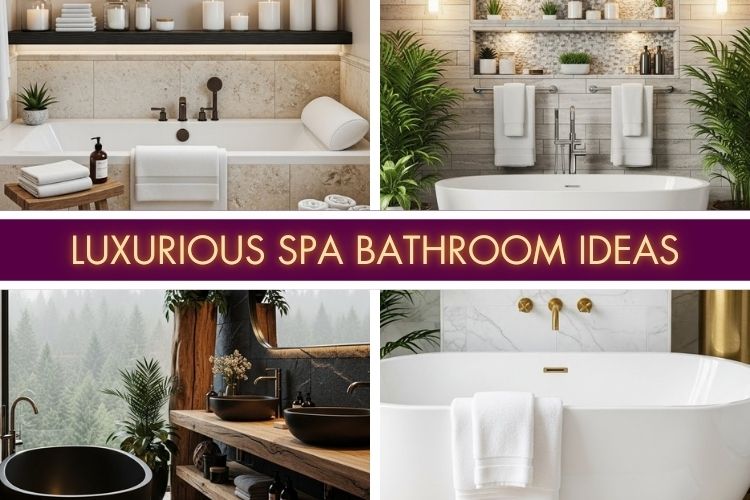
Spa bathroom ideas are the blueprint for transforming a utilitarian space into a personal wellness retreat. In a world that glorifies busy schedules, the bathroom remains a sacred fortress of solitude.
It is the one room where you can lock the door. It is where the day begins and ends. Therefore, it should not just be functional; it should be restorative.
We are moving beyond simple renovations. We are curating atmospheres. The goal is to lower your cortisol levels the moment you step onto the tile.
This comprehensive guide explores the intersection of hydrotherapy, aesthetics, and psychology. We will discuss specific features, lighting strategies, and decorative nuances.
Whether you are gutting the room or simply styling it, these insights will help you build a sanctuary.
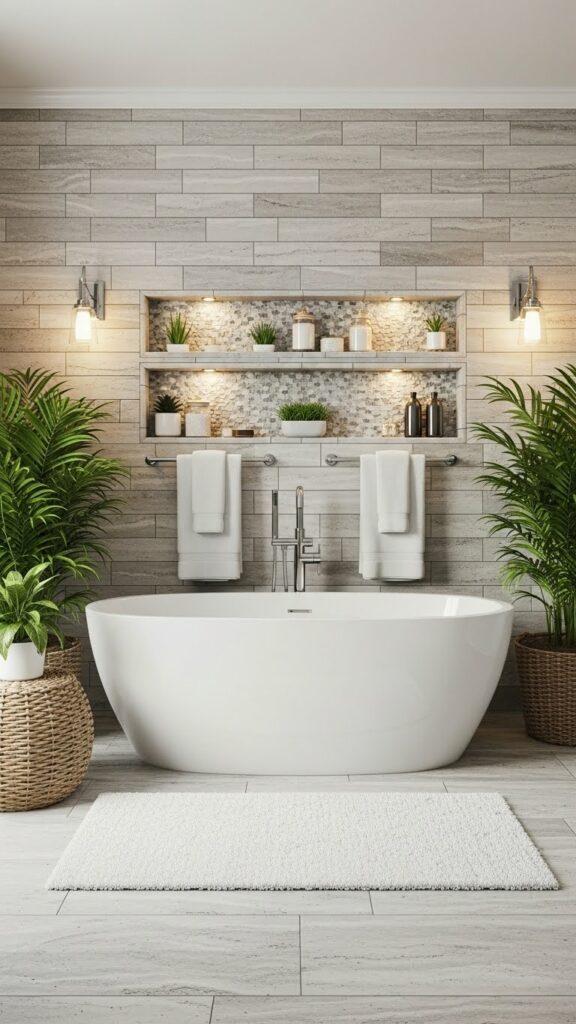
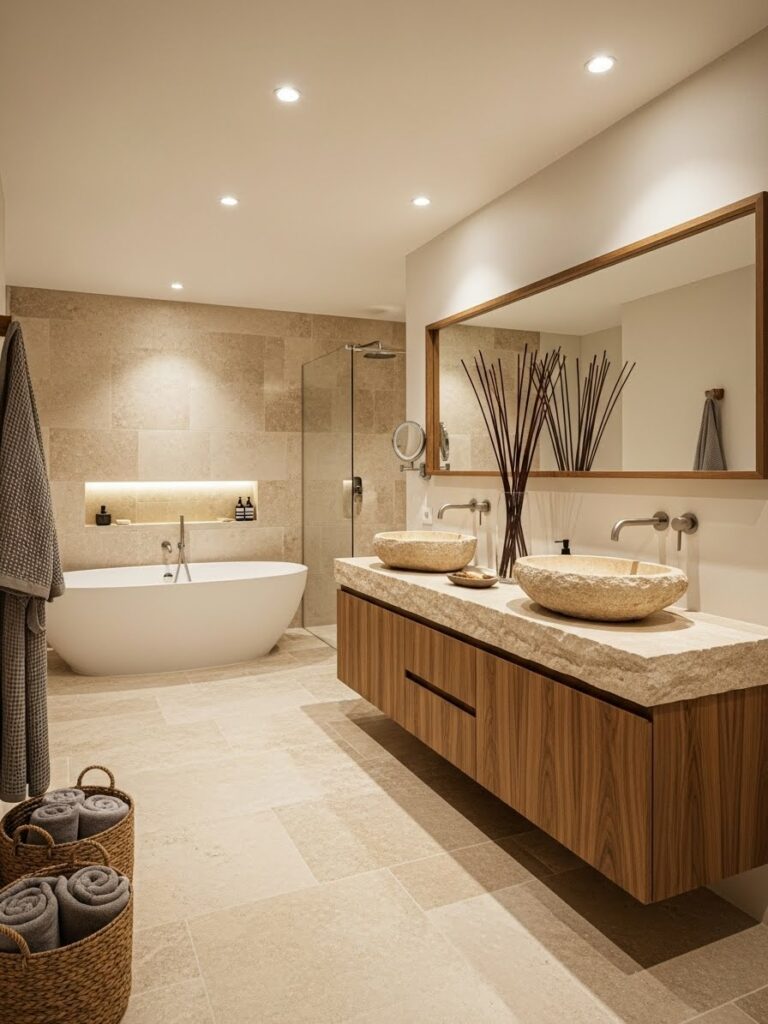
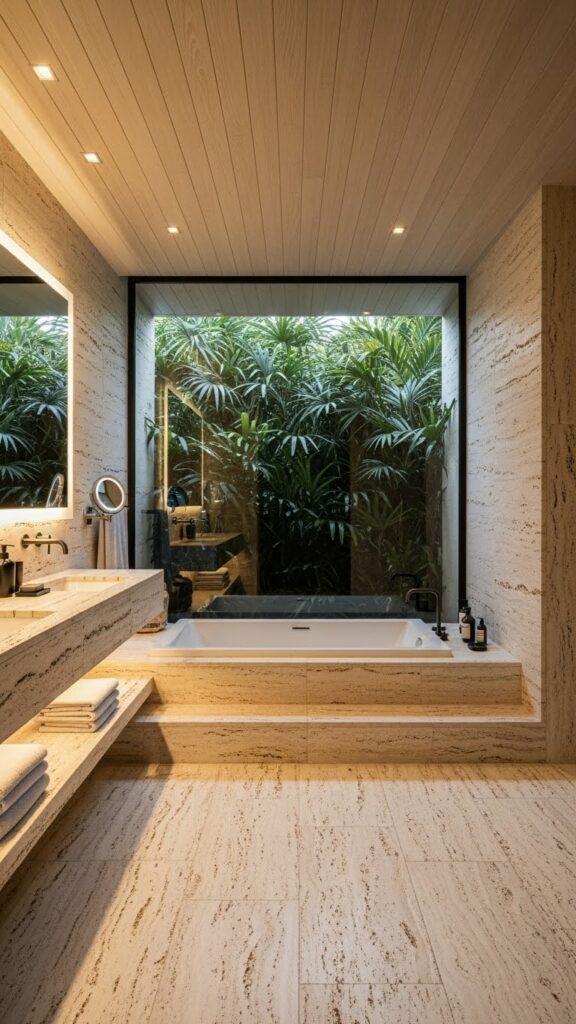
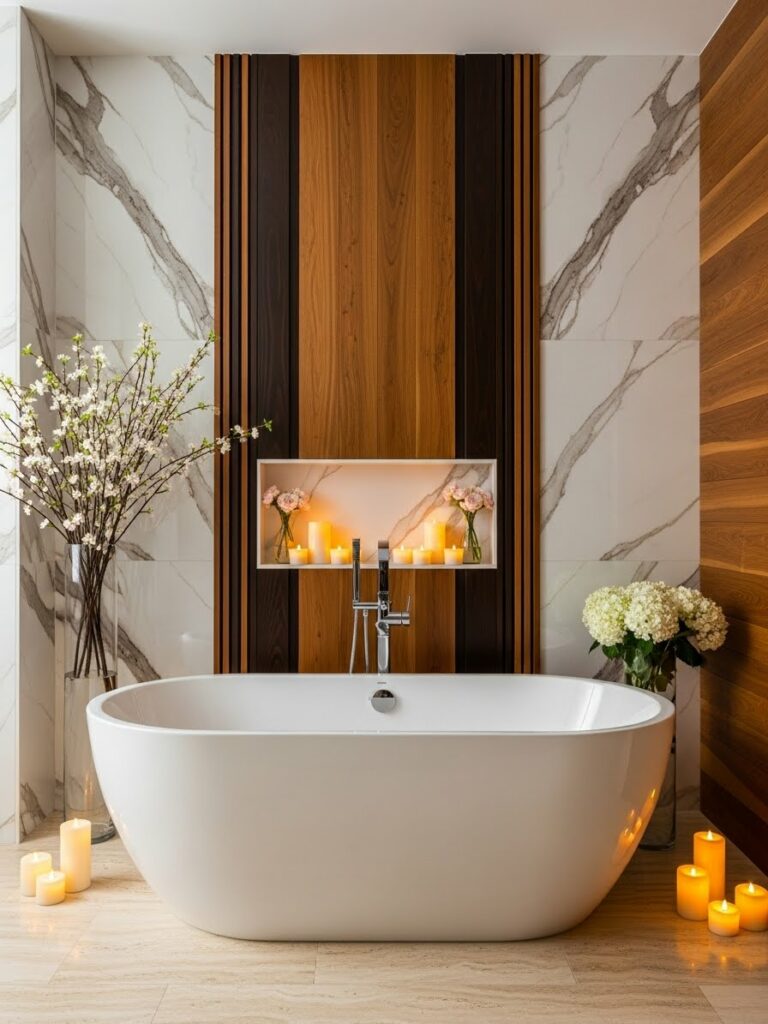

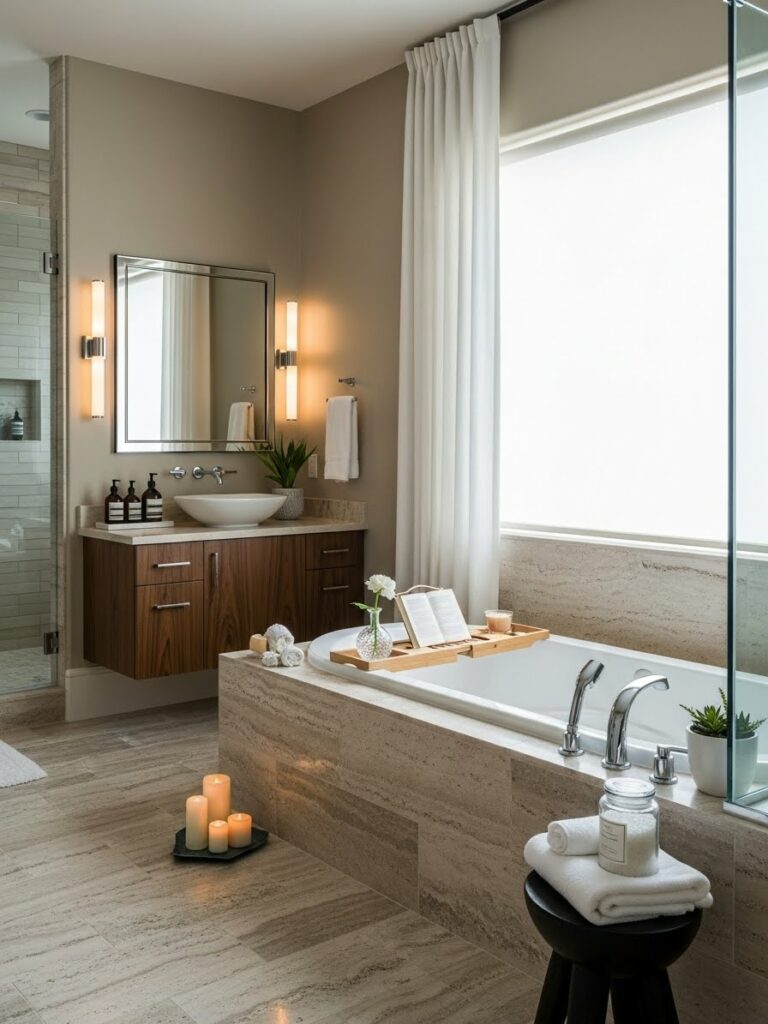
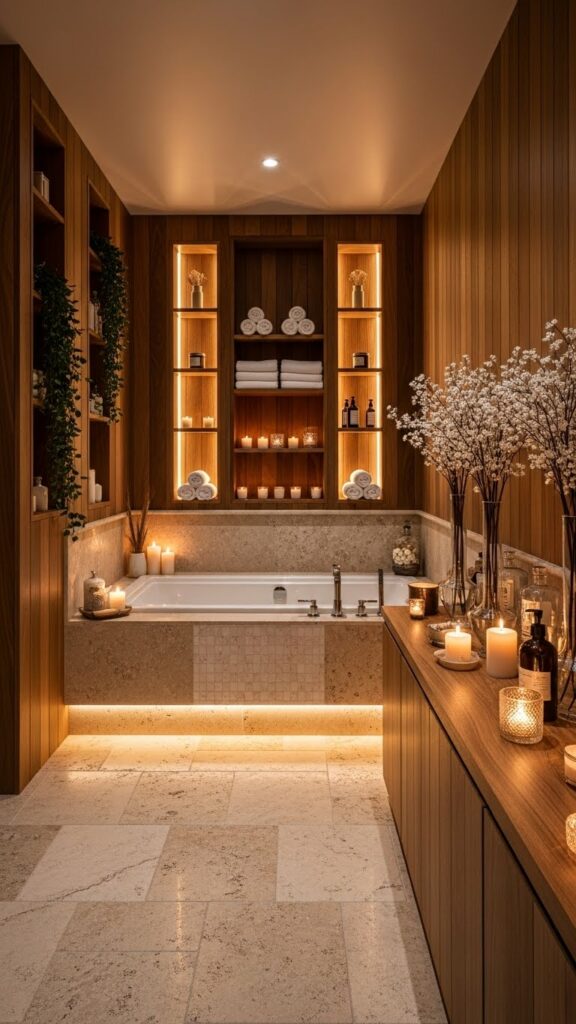
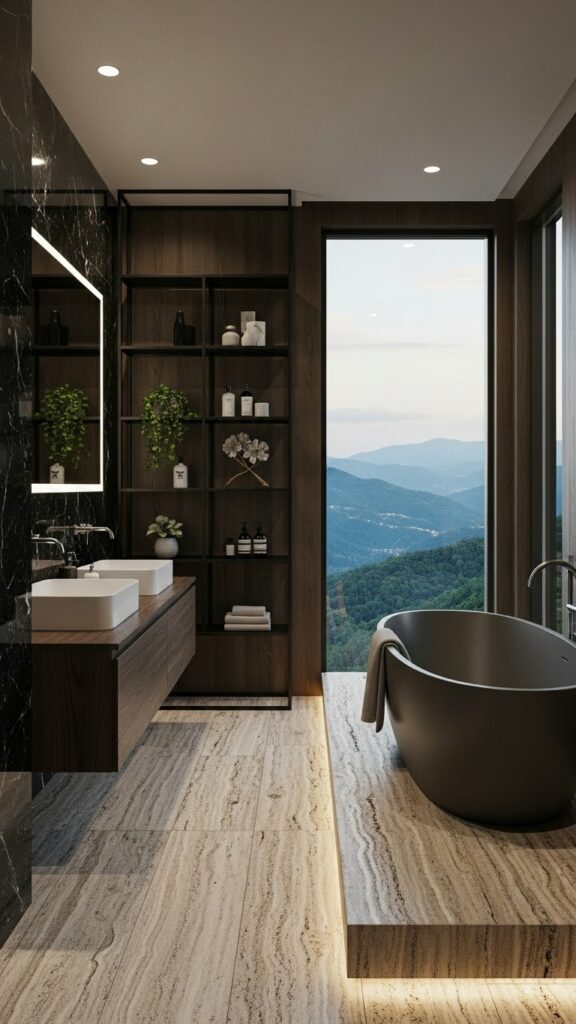

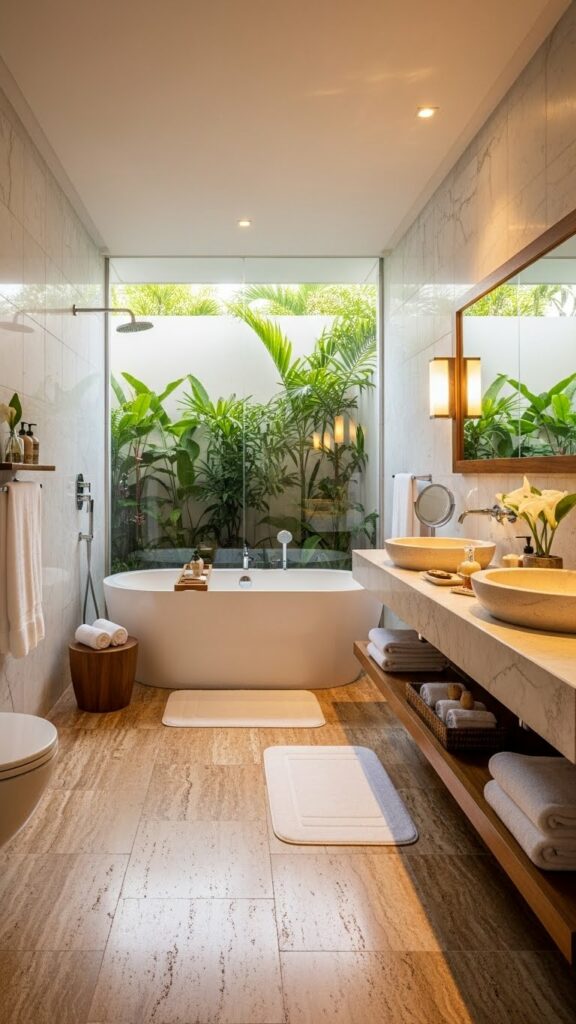
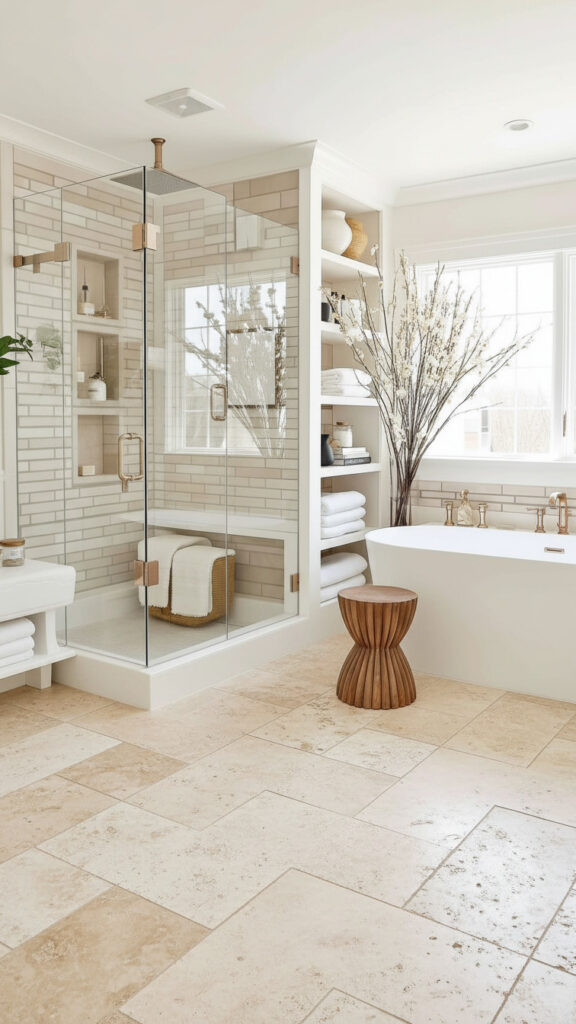
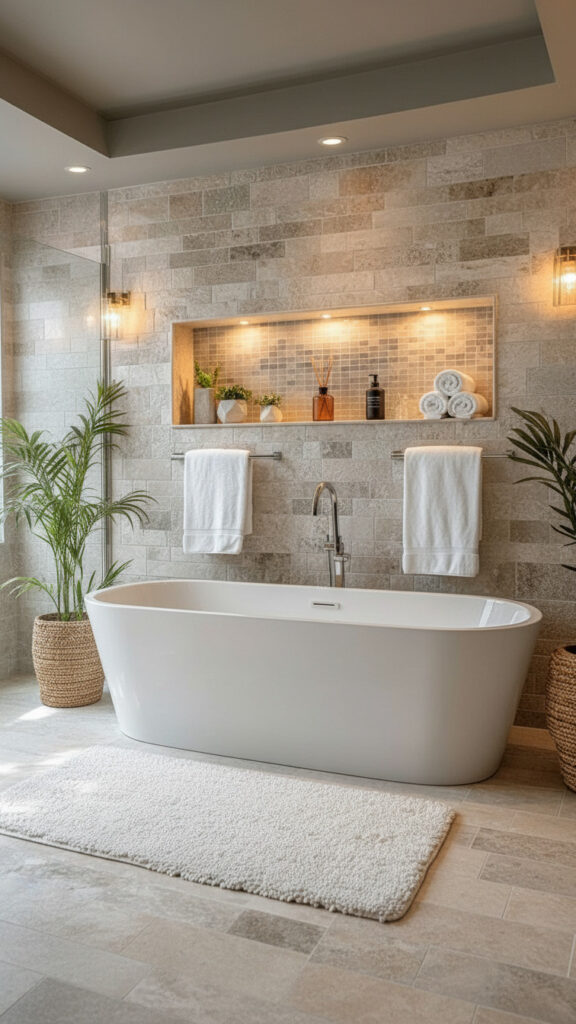
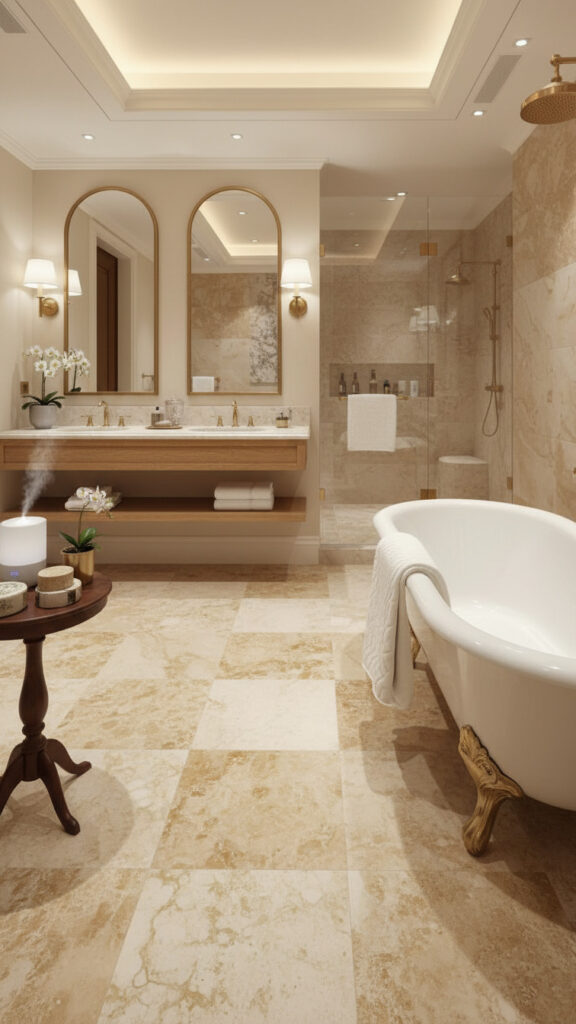
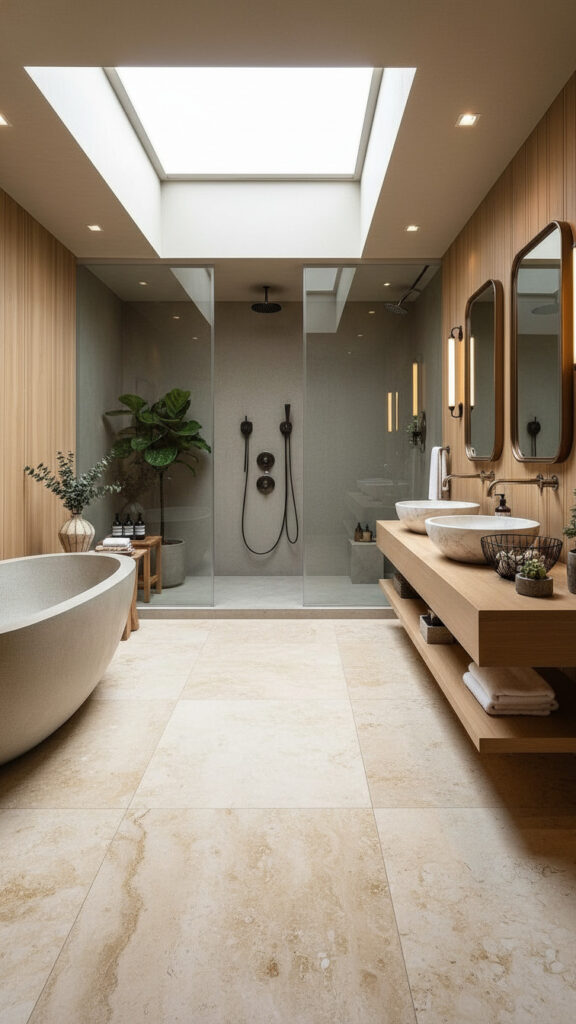
The Psychology of the Sanctuary
To execute spa bathroom ideas effectively, you must understand the “why.” A spa is not defined by expensive lotions. It is defined by the absence of stress.
Visual Quiet:
Clutter is noise. When your eyes see a messy counter, your brain registers a task list. A spa bathroom removes these visual triggers through aggressive concealment.
Sensory Deprivation:
True relaxation often comes from limiting sensory input. Soft lighting, muted colors, and dampened acoustics allow the nervous system to reset.
We are designing for “The Pause.” Every element, from the rug to the faucet handle, should encourage you to slow down.
The Centerpiece: The Soaking Tub
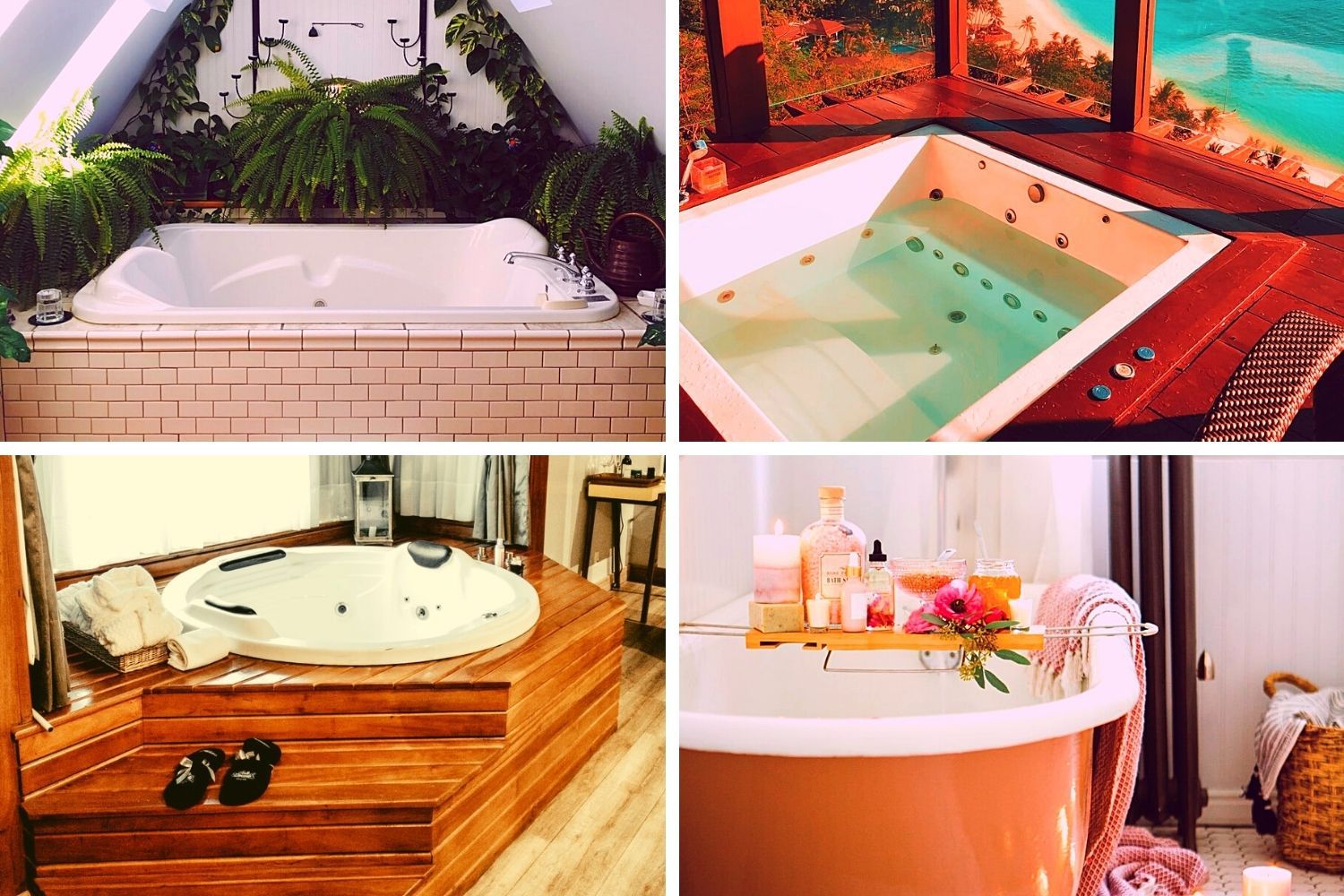
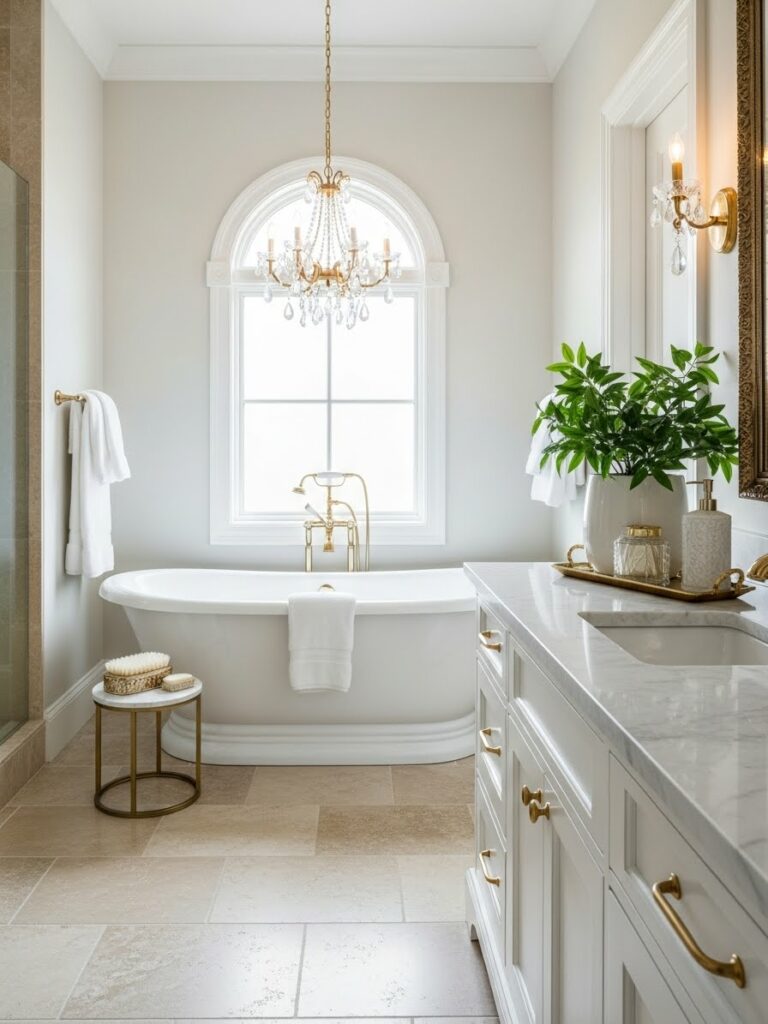
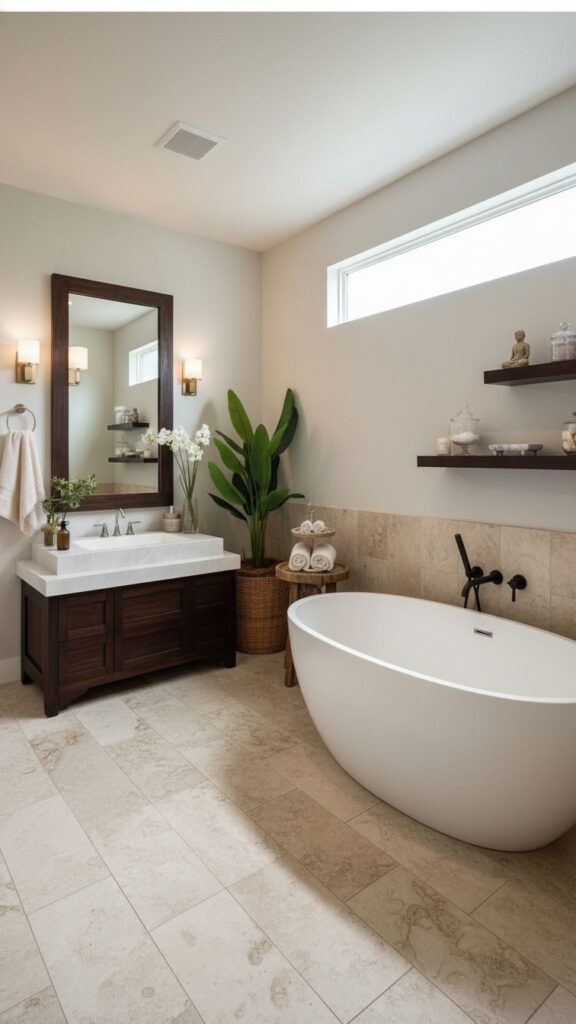
The bathtub is the altar of the home spa. It serves as the primary focal point. However, not all tubs are created equal.
The Deep Soak:
Standard tubs are too shallow. For a spa experience, look for a “soaking depth” of at least 14 inches. You want the water to cover your shoulders.
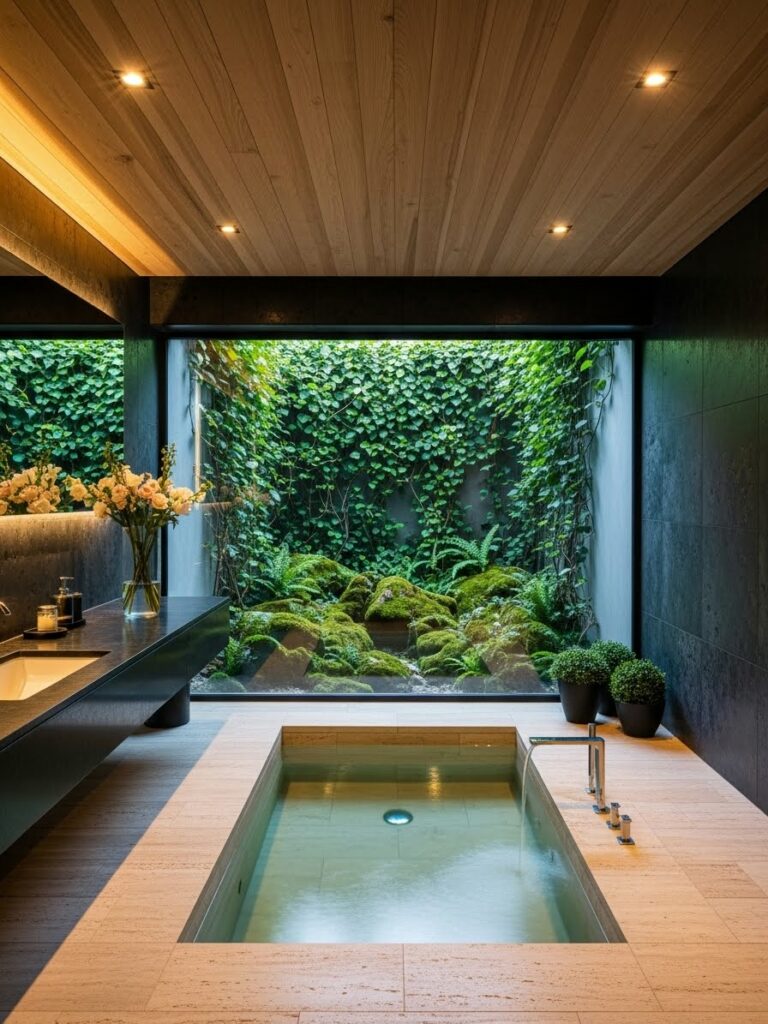
Japanese soaking tubs (Ofuro) are excellent for small spaces. They are deep and circular. They allow you to sit upright while fully submerged.
Material Matters:
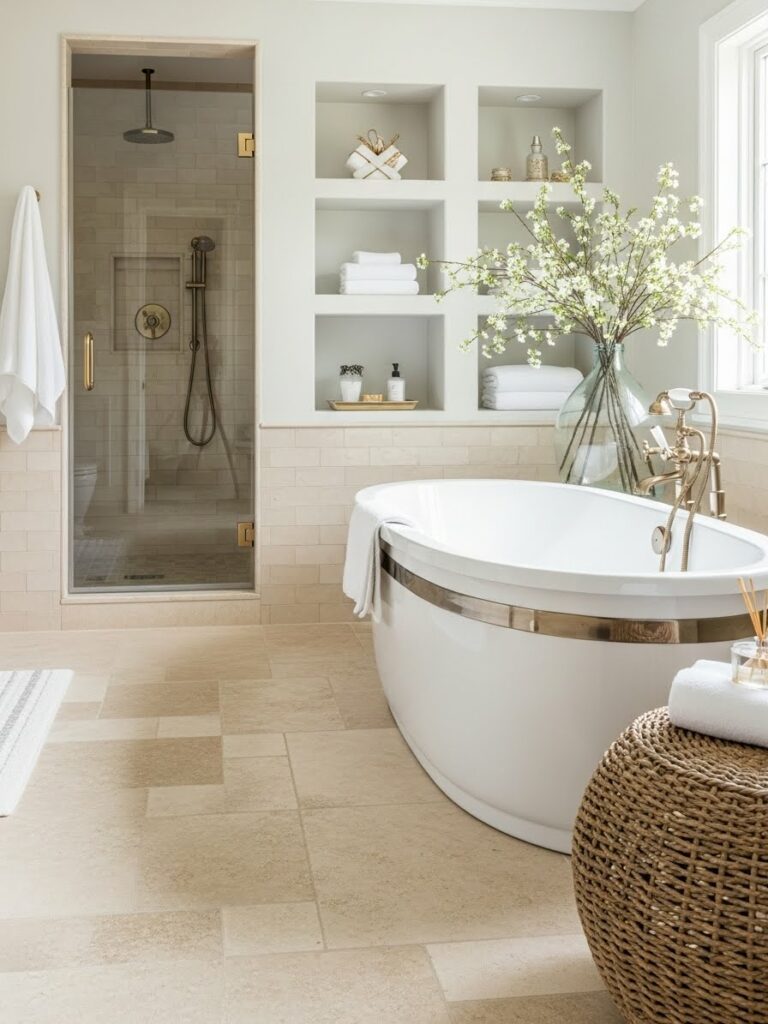
Acrylic is standard, but stone resin is luxury. Stone resin retains heat longer. It feels smooth and solid, like a river rock. It does not flex when you step in.
The Shower: A Hydrotherapy Ritual
If you prefer showers, focus on the flow rate. A trickle of water is frustrating. A deluge of water is therapeutic.
Rainfall Heads:
Install a ceiling-mounted rain shower. Ideally, it should be 12 to 16 inches wide. The water falls via gravity, not pressure. It mimics a warm summer storm.
Body Sprays:
Install articulating body sprays on the wall. They target sore muscles in the back. This turns a simple wash into a massage.
The Steam Generator:
This is the ultimate upgrade. A steam shower clears the sinuses and opens pores. It requires an enclosed glass space, but the health benefits are immense.
Lighting: The Mood Architect
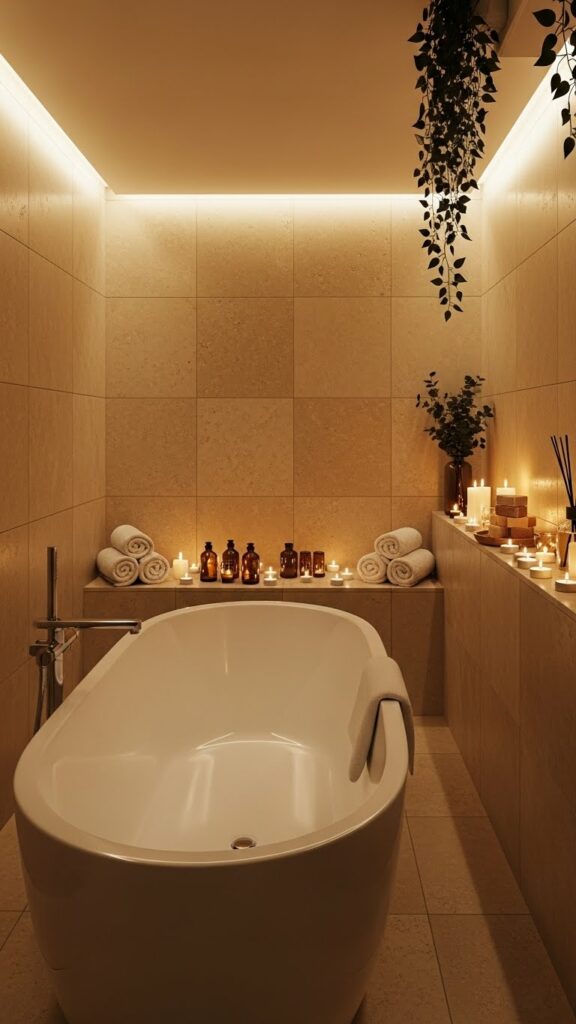
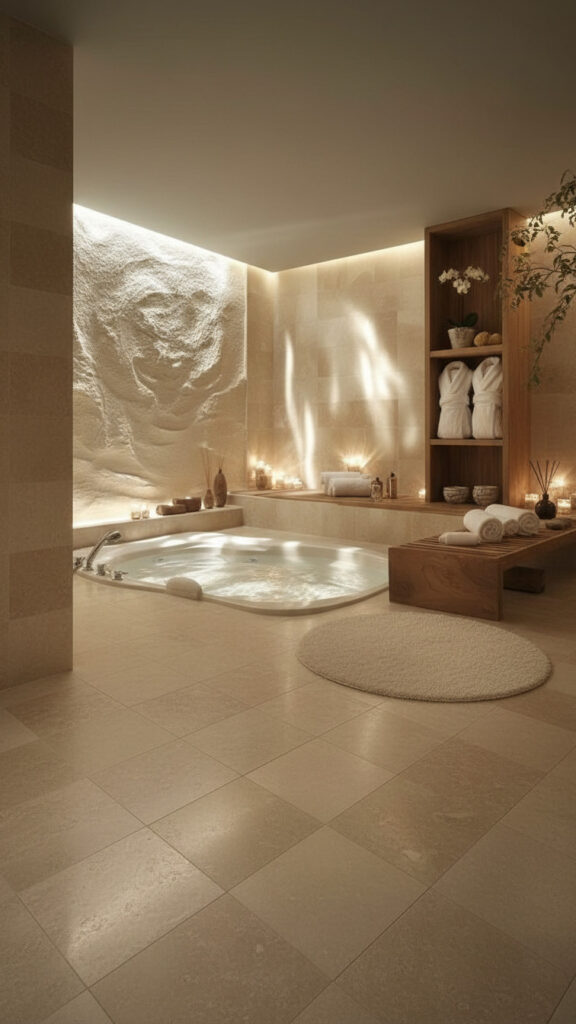
Harsh lighting is the enemy of relaxation. You must banish the “hospital glare.” Spa bathroom ideas rely heavily on dimmable, layered light.
The Kelvin Scale:
Stick to 2700K to 3000K. This is warm white. Anything higher (4000K+) introduces blue light, which wakes up the brain and disrupts sleep.
Indirect Glow:
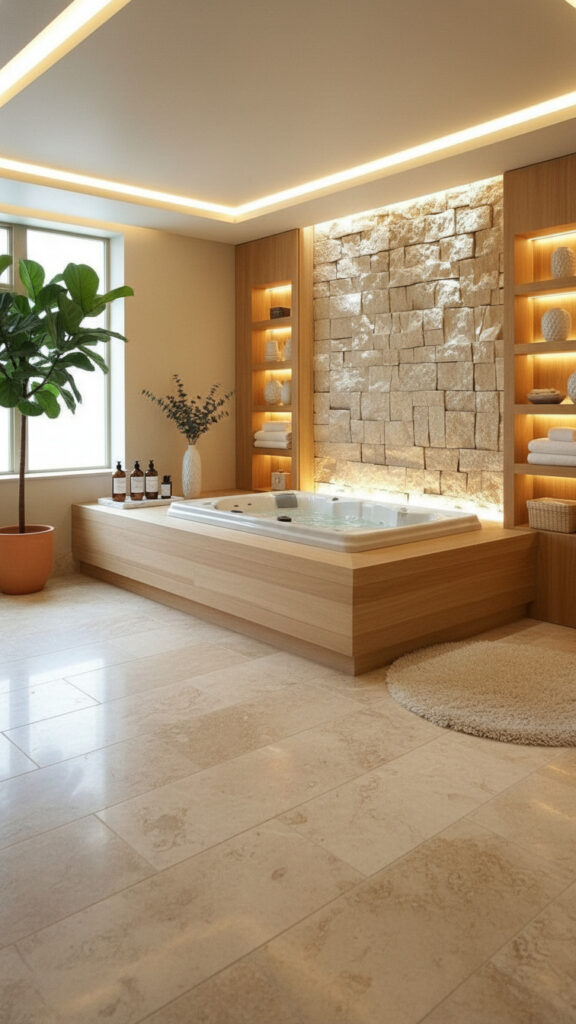
Hide the light source. Install waterproof LED strips in the shower niche. Install them under the floating vanity. The light should wash over surfaces, not shine in your eyes.
The Chandelier:
If codes allow, hang a statement chandelier over the tub. It acts as jewelry. It signals that this room is for leisure, not just utility.
Flooring: Tactile Reflexology
Your feet are the first point of contact. The floor should feel interesting. It should stimulate the senses.
Pebble Tile:
River rock or pebble mosaic tiles are popular for shower floors. The uneven surface gently massages the soles of your feet. It creates a connection to nature.
Radiant Heating:
Cold tile shocks the system. Electric radiant heat mats installed under the tile provide invisible luxury. It dries the floor quickly, preventing mold.
Teak Duckboards:
Place a wooden slat mat outside the shower. Teak is naturally water-resistant. Stepping onto warm wood feels nautical and spa-like.
Idea 1: The Bali Villa Aesthetic
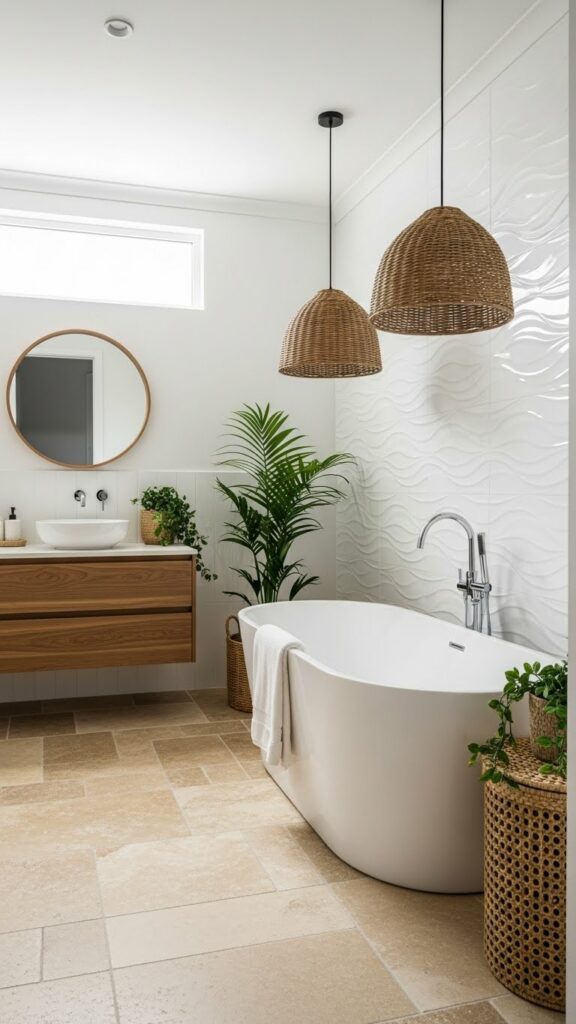
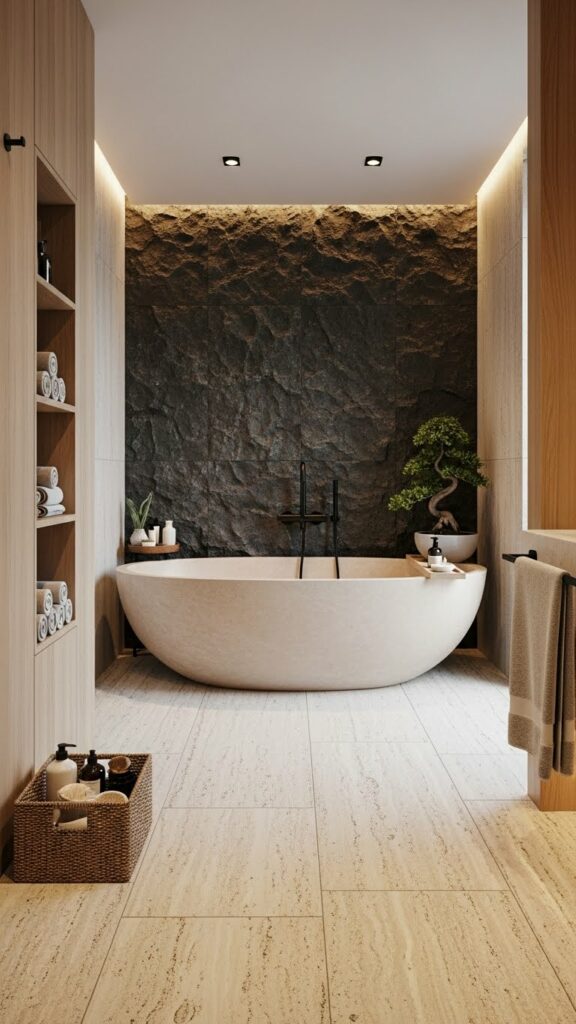
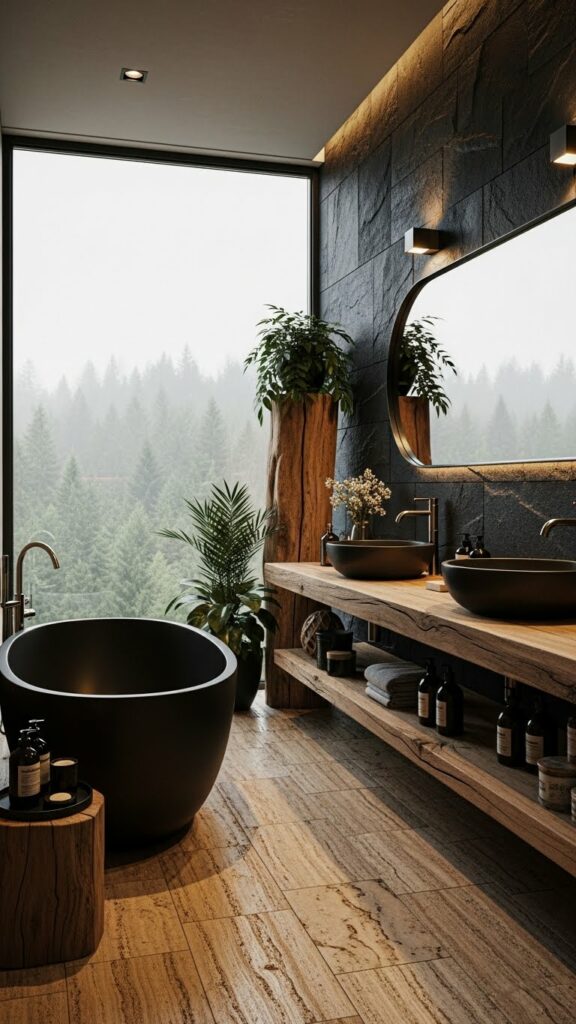
Transport yourself to Indonesia. This style is organic, lush, and open.
Key Elements:
- Living Plants: Large Monsteras or ferns that thrive in humidity.
- Stone Vessels: Sinks carved from rough river boulders.
- Bamboo Accents: Ladders for towels or blinds for windows.
Why It Works:
It blurs the line between indoors and outdoors. The rough textures contrast beautifully with the water. It feels humid and tropical.
Idea 2: The Nordic Sauna Vibe
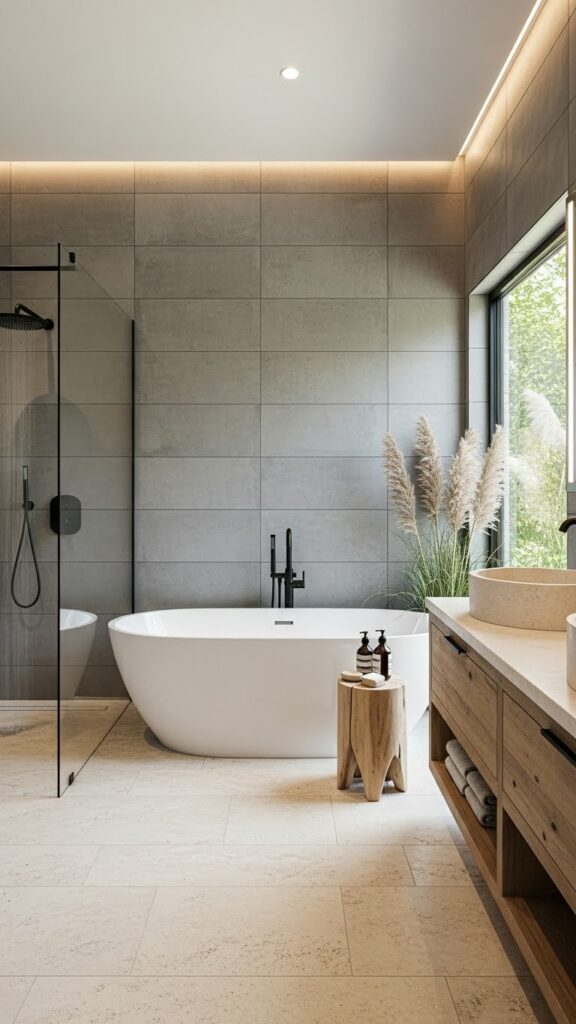
This is for those who prefer clean lines and dry heat. It is minimalist but warm.
Key Elements:
- Light Wood Cladding: Cedar or ash walls.
- Matte Black Fixtures: High contrast against the pale wood.
- Concrete: Polished concrete floors or sinks for an industrial touch.
Why It Works:
It is visually quiet. The uniform wood grain is soothing. It emphasizes heat and hygiene. It feels incredibly modern.
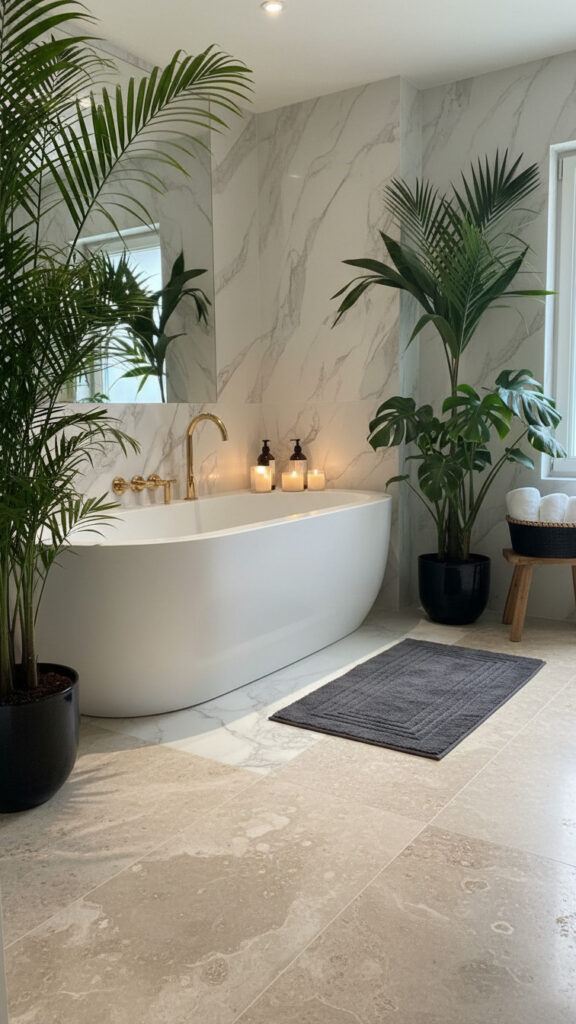
Idea 3: The Marble Hamam
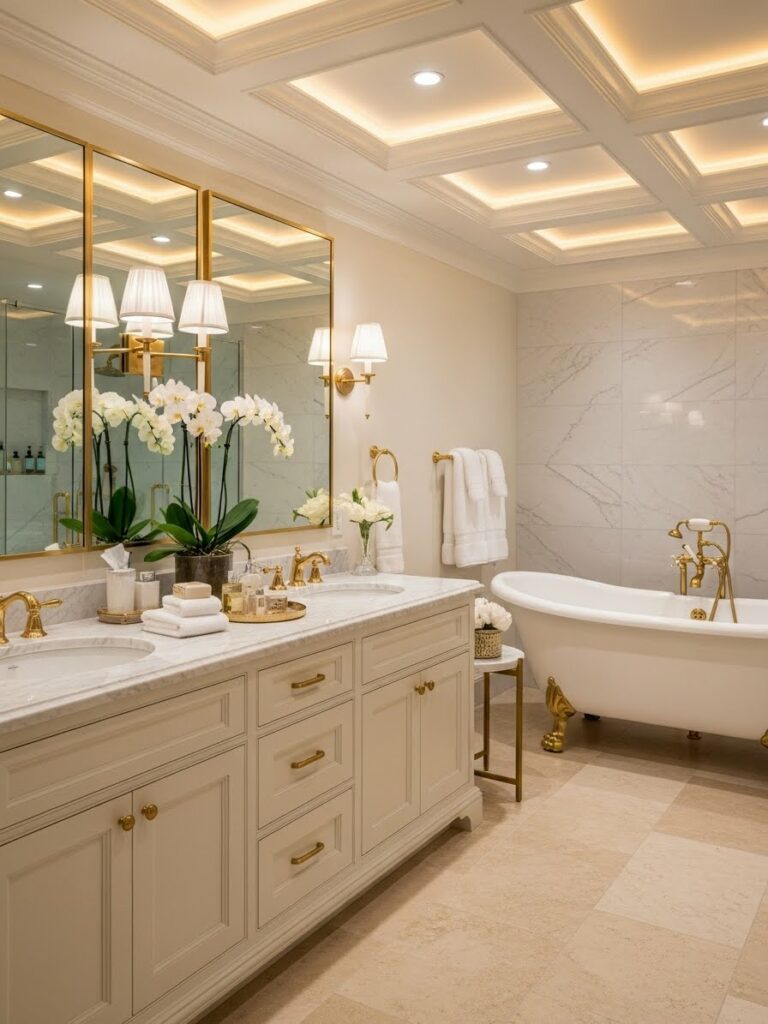
Draw inspiration from Turkish baths. This style is heavy, permanent, and stone-focused.
Key Elements:
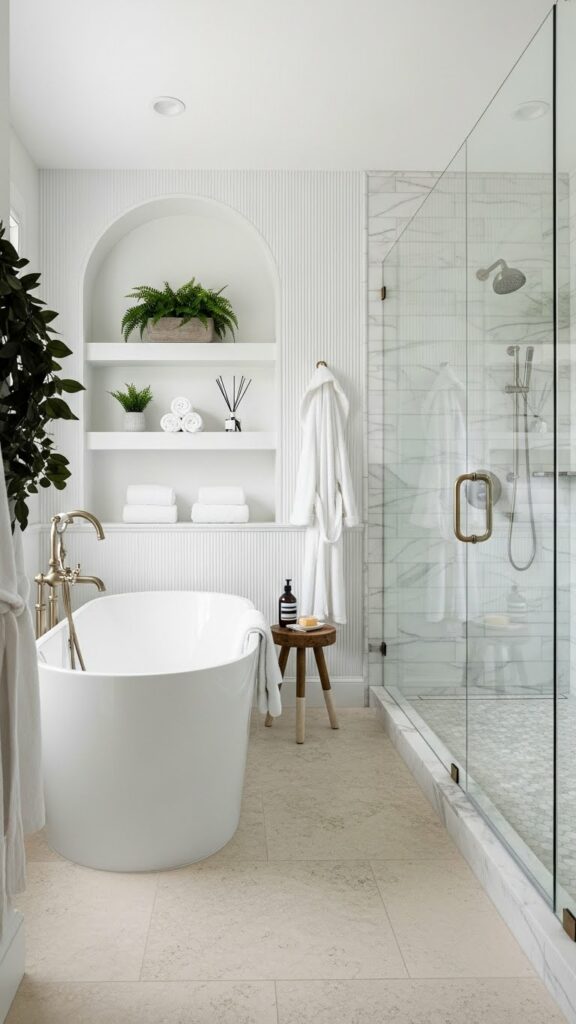
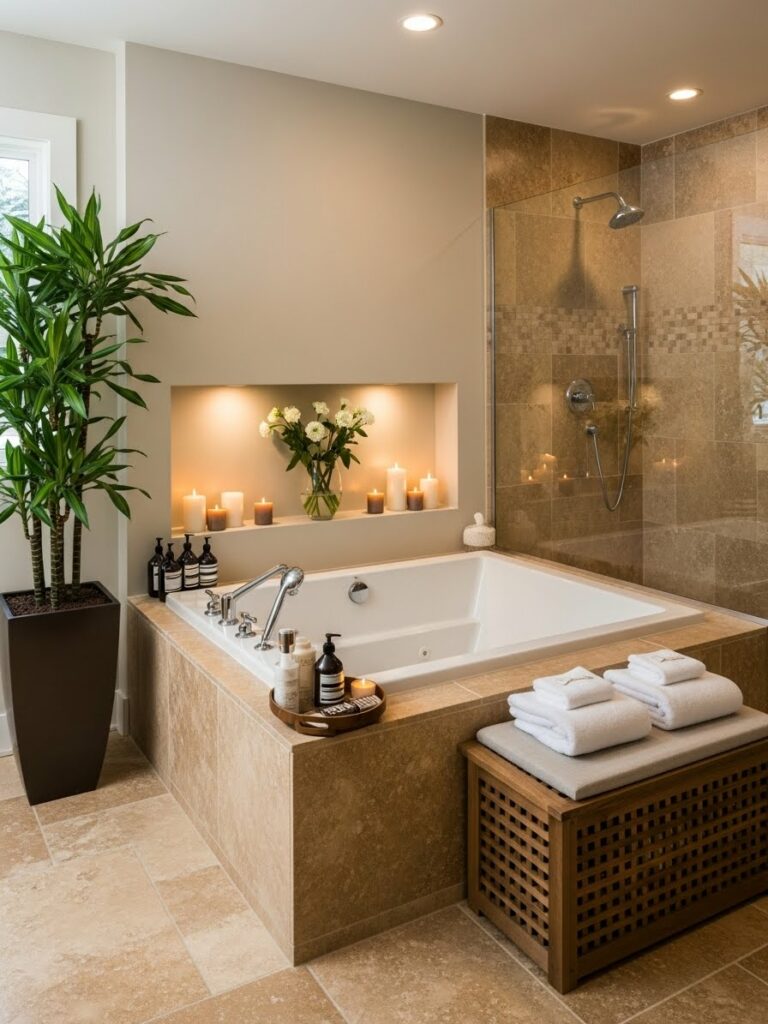
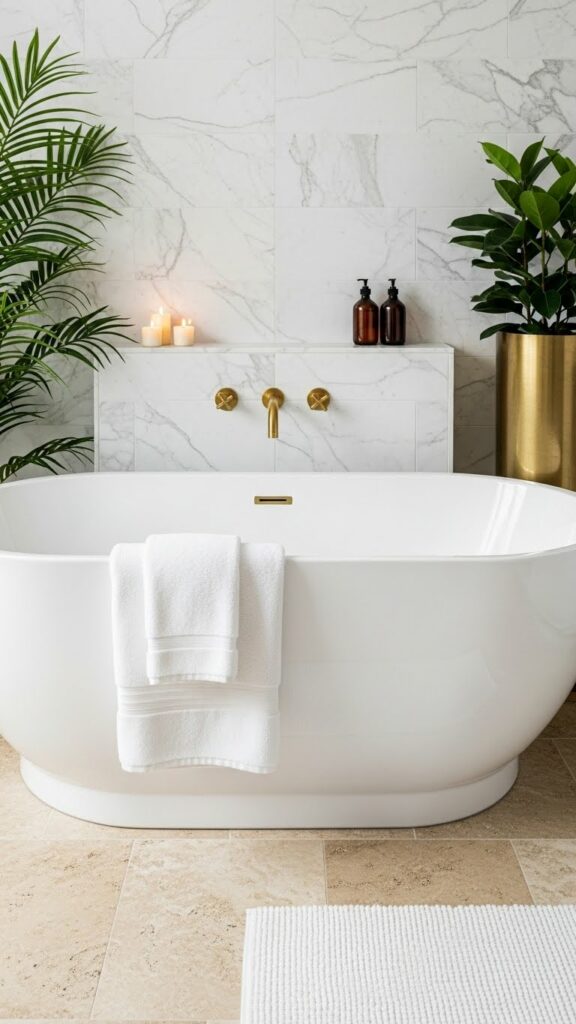
- Floor-to-Ceiling Tile: Large format marble or travertine.
- Built-in Seating: A tiled bench in the shower.
- Brass Hardware: Unlacquered brass that patinas over time.
Why It Works:
The sheer amount of stone creates an echo. While usually bad, here it mimics a cavern. It feels ancient and cleansing.
Aromatherapy Integration
Scent is the strongest trigger for memory. A spa always smells like eucalyptus or lavender. You must engineer this.
The Eucalyptus Bundle:
Tie fresh eucalyptus branches to your shower head. The hot steam releases the oils. It clears the lungs. Replace it monthly.
Diffusers:
Use a ceramic stone diffuser. Avoid cheap plastic ones with flashing lights. The object itself should be beautiful.
Soaps and Salts:
Decant your soaps. Put Epsom salts in large glass jars with wooden scoops. The visual of the salt prepares the mind for a soak.
The Power of Textiles
Your skin is sensitive after a bath. Do not ruin the moment with a scratchy towel. Spa bathroom ideas require an investment in linen.
Turkish Cotton:
Look for long-staple cotton. It becomes softer with every wash. It is highly absorbent.
Waffle Weave:
These towels are lightweight. They dry quickly, preventing musty odors. They offer a gentle exfoliation texture that feels very European.
The Robe Hook:
Install a sturdy hook right next to the shower. Hang a plush robe there permanently. It is a promise of comfort.
Biophilic Design: Nature Indoors
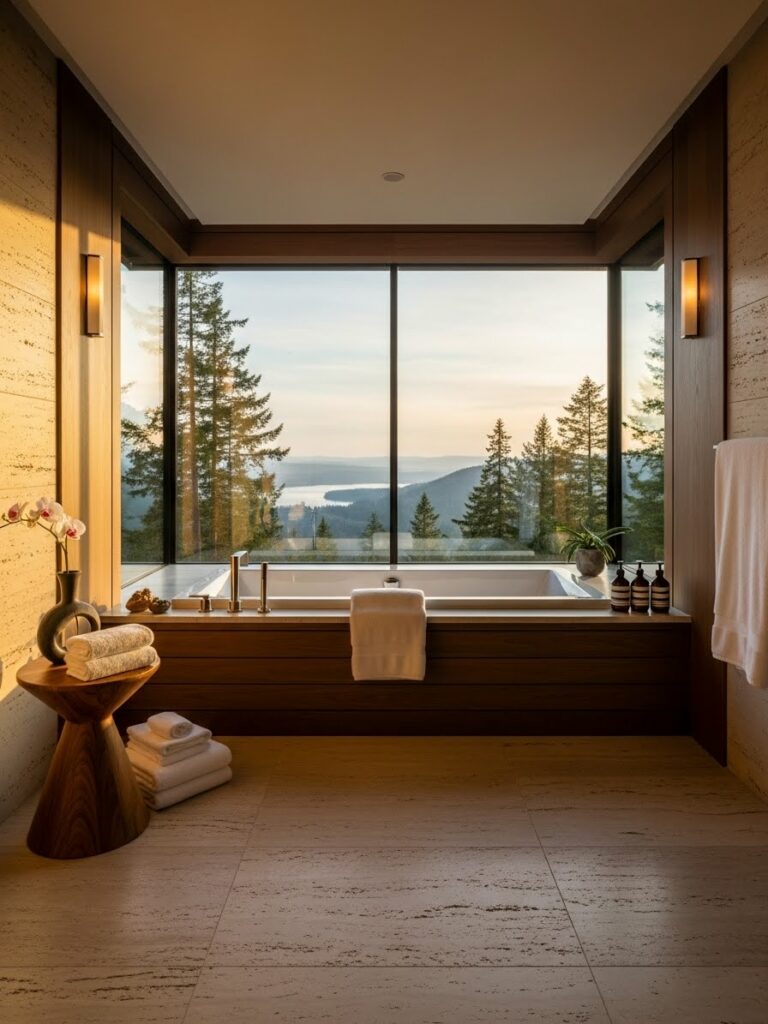
Humans have an innate desire to connect with nature. Windowless bathrooms often feel suffocating. Plants break the sterility.
High Humidity Plants:
Ferns, Pothos, and Orchids love bathrooms. They drink the humidity. Place a Pothos on a high shelf and let it trail down.
Dried Florals:
If you lack light, use dried pampas grass or lavender. Put them in an earthenware vase. They add softness without the maintenance.
Soundscapes and Technology
Silence is good, but curated sound is better. Drown out the traffic noise or the kids playing in the other room.
Waterproof Audio:
Install a Bluetooth speaker in the ceiling fan. Or, simply place a high-quality portable speaker on a shelf.
Create a dedicated “Spa Playlist.” Use binaural beats, rainfall sounds, or ambient drone music.
Storage: The Art of Concealment
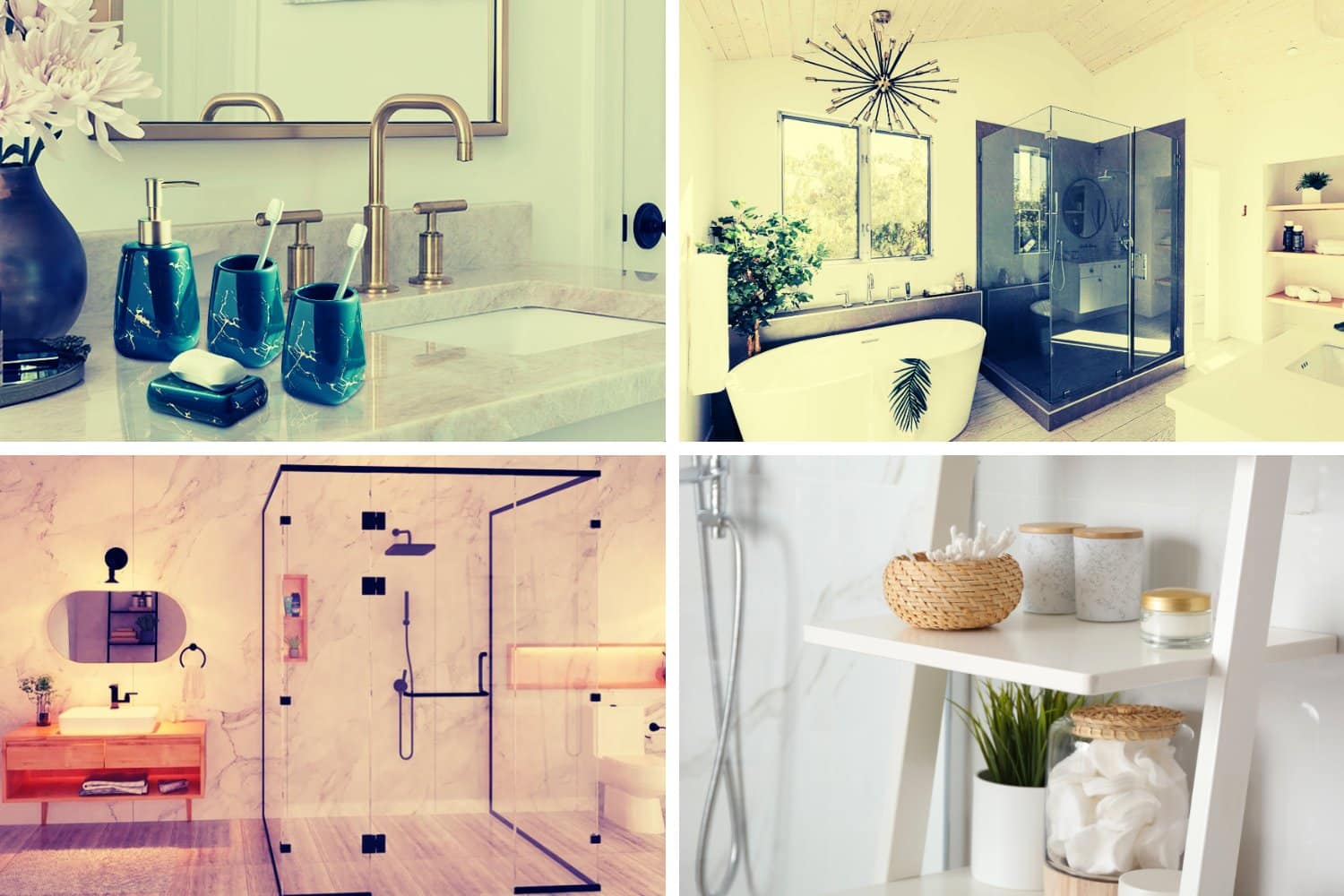
You cannot relax if you are looking at a bottle of bleach. Spa bathroom ideas dictate that utility items must be invisible.
The Appliance Garage:
Create a drawer with a built-in outlet. Plug your hair dryer and shaver inside. They never sit on the counter.
Decanting Liquids:
Transfer shampoo and body wash into matching amber or ceramic bottles. Uniformity calms the eye.
Baskets:
Use woven seagrass baskets for toilet paper and extra towels. The texture adds warmth while hiding the mundane items.
The Bathtub Tray: Styling the Soak
The bathtub tray is a functional accessory that serves as a styling prop. It bridges the gap across the tub.
Wood Selection:
Choose teak, bamboo, or cedar. These woods resist water damage. Avoid metal trays that might rust or scratch the tub.
Curated Items:
Place a loofah, a book, and a glass of water on the tray. It sets the scene. It invites you to enter the water.
Small Bathroom Spa Hacks
You do not need a massive footprint to have a spa. You need smart design.
Glass Partitions:
Replace the shower curtain with a frameless glass panel. It opens up the visual lines. It allows light to travel through the room.
Floating Vanities:
Mount the sink cabinet to the wall. Seeing the floor underneath makes the room feel larger. It creates an airy aesthetic.
Vertical Storage:
Use the height of the room. Install shelves above the door. Store towels there to keep the lower areas clear.
Temperature Control
Being cold ruins relaxation. Ensure the ambient temperature is higher than the rest of the house.
Towel Warmers:
A hardwired towel warmer is a luxury that pays off daily. Wrapping yourself in a hot sheet is a hug. It also helps dry damp towels quickly.
Space Heaters:
If you don’t have heated floors, use a safe, small ceramic heater. Pre-heat the room 10 minutes before your bath.
Color Theory for Wellness
Color affects your heart rate. Avoid bright reds or neons. Stick to earth tones.
Sage Green:
This color represents nature and renewal. It pairs perfectly with wood tones.
Sandy Beige:
Warm neutrals mimic the beach. They reflect light softly. They are timeless.
Charcoal Grey:
Dark colors can be cozy. They create a “cave” effect that feels protective and safe.
Maintenance: Keeping the Zen
A dirty spa is not a spa. Your design choices should make cleaning easy.
Large Format Tiles:
Use massive tiles (24×48 inches). This minimizes grout lines. Grout is where mold lives. Less grout means less scrubbing.
Wall-Mounted Faucets:
Mount the taps on the wall, not the counter. This prevents water from pooling around the base. It keeps the counter wipeable.
Common Mistakes to Avoid
1. Overcrowding:
Do not squeeze a bathtub into a room that cannot fit it. If you bump your shins, it is not a spa. Sometimes a luxury shower is better than a cramped tub.
2. Bad Ventilation:
Humidity causes mold. Install a whisper-quiet fan. Put it on a timer. Good air quality is part of wellness.
3. Slippery Surfaces:
Polished marble looks great but is dangerous. Choose “honed” or matte finishes for floors. Safety is the first rule of relaxation.
Conclusion: Your Daily Reset
Implementing spa bathroom ideas is an investment in your longevity. Stress is a silent killer. Your home needs a designated zone for decompression.
You do not need to renovate the entire room. Start by changing the lighting. Add a plant. Buy better towels.
Slowly layer in the elements of hydrotherapy and biophilia. Transform the chore of washing into the ritual of renewal. Your mind and body will thank you.